Friday, August 28, 2026
Big Tech Is Becoming an Energy Investor
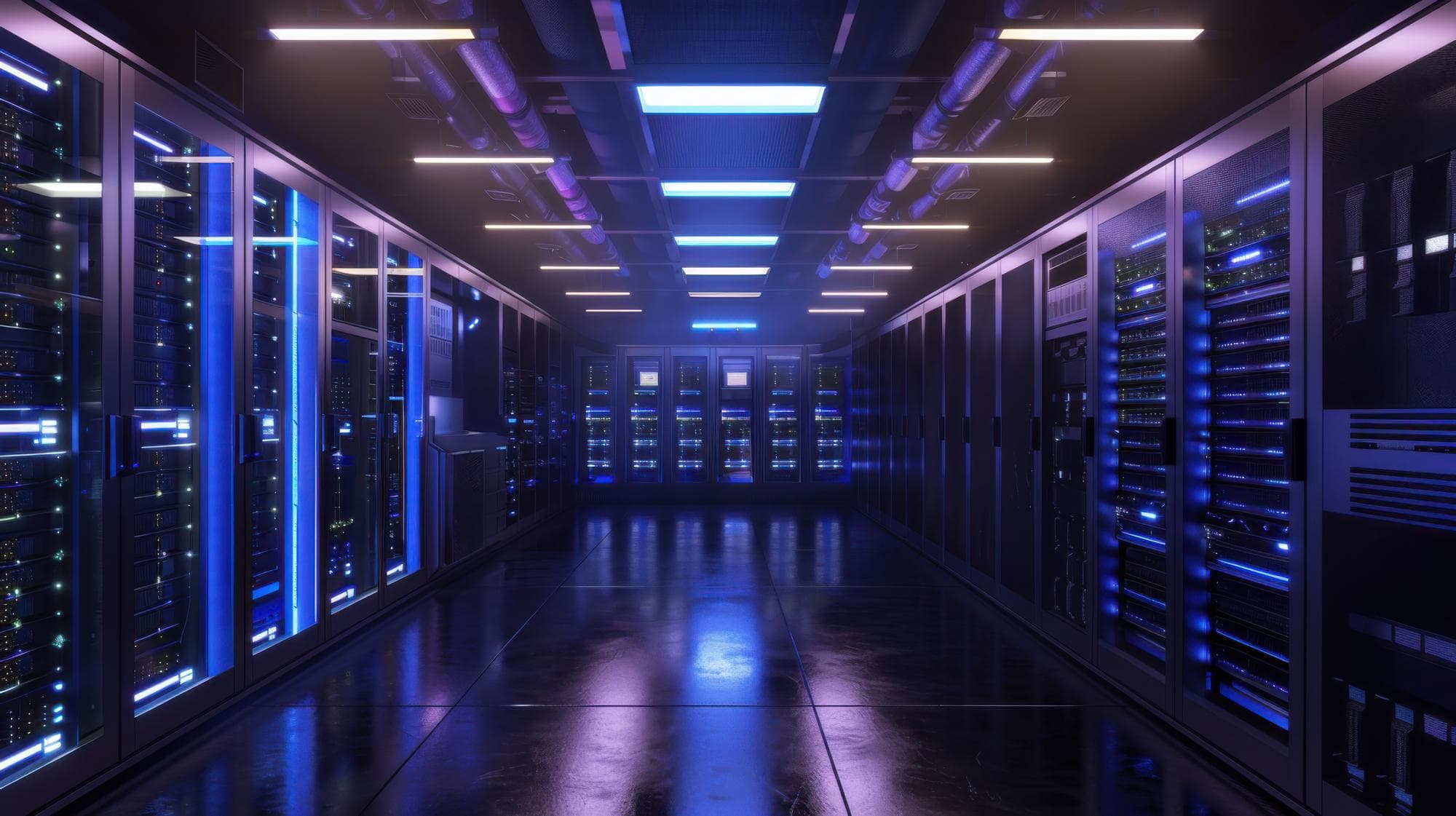
Data Center Energy Strategy Is Moving Upstream
For decades, the relationship between data centers and the power industry followed a relatively straightforward model. Utilities generated or procured electricity, infrastructure operators delivered it, and data center companies purchased the capacity required to support their facilities. Even as corporate renewable procurement expanded, the basic structure remained largely intact: data center operators were primarily customers of an energy system developed by others.
That relationship is becoming more sophisticated. Large computing operators are increasingly supporting generation projects years before those assets enter service, signing long-duration energy agreements, participating in new infrastructure programs, investing in emerging technologies, and working with utilities on customized structures designed around substantial future loads. In some cases, generation and computing capacity are being planned as coordinated components of the same development strategy.
The significance extends beyond individual transactions. Data center companies are moving earlier into the energy development cycle, helping create the commercial conditions required for new power supply to advance. Energy procurement is gradually expanding from the question of what electricity is available to a more strategic question: what infrastructure needs to be developed to support future computing demand?
From Purchasing Power to Supporting New Supply
Traditional corporate energy procurement primarily focused on acquiring electricity from existing or planned resources. Renewable power agreements expanded that model by allowing large buyers to commit to the output of new wind and solar projects, providing developers with long-term revenue visibility while supporting corporate energy objectives.
The current generation of data center energy agreements can go further. Large operators may provide long-term offtake commitments, participate in project financing, support development-stage energy technologies, coordinate new generation with campus construction, or assume specific infrastructure costs associated with serving their facilities. These structures move the data center customer closer to the development and financing process.
This matters because large energy projects require substantial capital long before electricity reaches a customer. Generation facilities, transmission upgrades, substations, storage systems, and associated equipment can require years of development and construction. A long-term commitment from a large, creditworthy electricity user can improve project economics by giving developers and investors greater confidence that future output will have a customer.
The result is an important shift in the relationship between computing and energy. Instead of waiting for enough power infrastructure to appear, some data center operators are helping create the commercial foundation that allows additional capacity to be built.
Compute and Generation Are Being Planned Together
One of the clearest changes is the growing interest in coordinating data center development with new generation. Historically, the two often progressed through largely separate processes. An energy project was developed and connected to the grid, while a data center was planned around whatever utility capacity could ultimately be delivered to its chosen site.
A more integrated approach attempts to coordinate those timelines from the beginning. Generation, storage, transmission requirements, substation capacity, and data center construction can be evaluated as parts of the same infrastructure plan. In some cases, generation may also be located closer to the computing load, reducing portions of the transmission and interconnection challenge.
The strategic benefit is greater visibility. Developers gain a clearer understanding of how future electrical capacity will be created, while energy providers gain a long-term customer whose demand supports the investment case. Coordination does not eliminate permitting, supply-chain, financing, or interconnection challenges, but it can reduce the uncertainty that comes from planning the two systems independently.
For large campuses, synchronizing energy infrastructure with computing infrastructure may become increasingly valuable. A completed building without electricity cannot produce usable capacity, just as a generation project without transmission or committed demand may struggle to reach its full economic potential.
Energy Portfolios Are Expanding Across Technologies
Large data center operators are also broadening the range of energy resources they support. Recent strategies across the market have included renewable generation, geothermal power, grid-scale storage, existing nuclear capacity, advanced reactors, dispatchable generation, and utility infrastructure investment.
This diversification reflects the fact that no single technology solves every component of the data center power challenge. Renewable resources can provide large quantities of low-carbon electricity. Storage can add flexibility and support short-duration balancing. Dispatchable generation can provide firm capacity, while nuclear and geothermal resources can contribute continuous output over longer periods.
Advanced technologies introduce another time horizon. Some operators are committing capital to resources that may not reach large-scale commercial deployment until the 2030s because their long-term campus plans require energy options beyond what is available today.
The strategy increasingly resembles portfolio construction. Operators are assembling combinations of near-term, medium-term, and long-term energy resources rather than assuming one technology will support every future requirement.
Long-Term Contracts Can Function Like Infrastructure Support
Moving upstream does not always require direct ownership of an energy asset. A sufficiently large and long-duration contractual commitment can itself help enable investment.
Some recent power agreements have extended for decades and supported projects involving hundreds of megawatts of generation. From the energy developer's perspective, that contractual certainty can improve the ability to finance capital-intensive projects because future demand is backed by a credible buyer.
This expands the traditional definition of energy investment. The data center company may not own the generating facility, operate the equipment, or manage the grid connection. Its contribution is demand certainty, which can be just as important to project financing as direct capital in certain structures.
For the data center sector, this creates a wider range of participation models. Equity investment, long-term energy agreements, development partnerships, infrastructure contributions, and customized utility arrangements can all help support new power capacity without requiring operators to become energy companies themselves.
Large Loads Can Anchor New Energy Investment
The attraction is mutual. Data center operators need large amounts of dependable electricity, while energy developers need customers capable of supporting projects with significant capital requirements and long operating lives.
Large computing campuses can offer several characteristics that are attractive to energy developers: substantial electricity consumption, long-term growth, strong credit profiles, predictable operating requirements, and the ability to enter multi-year or multi-decade commercial arrangements. Those characteristics can make data center demand a powerful anchor for new generation.
This is particularly important for projects that require significant upfront investment. A new power plant, major storage facility, geothermal development, or advanced reactor program can involve billions of dollars in capital and long development periods. The presence of a committed customer can materially improve the project's financing outlook.
In this way, data center demand can contribute to creating additional supply rather than simply competing for existing megawatts. The load itself becomes part of the economic foundation supporting new energy infrastructure.
Partnership Is Becoming an Important Deal Structure
Many of the most consequential energy transactions associated with data centers are not traditional acquisitions. They are partnerships involving several organizations with different capabilities.
A typical structure might combine a data center operator with an energy developer, utility, infrastructure investor, or emerging technology provider. Each participant contributes something different: demand, capital, generation expertise, grid access, technology, financing, land, or regulatory experience.
This collaborative structure can provide many of the strategic benefits of direct ownership without requiring a data center operator to acquire an entire energy business. The operator gains greater visibility into future capacity and may influence project timing or technology selection, while experienced energy participants retain responsibility for developing and operating the infrastructure.
Partnership activity may therefore become as important to monitor as traditional energy mergers and acquisitions. The structure of these agreements can reveal where large energy users expect future constraints and which technologies they believe can play meaningful roles in solving them.
Data Center Demand Can Accelerate Emerging Technologies
Moving upstream also allows data center companies to influence the commercialization of energy technologies that remain early in their deployment cycle. Advanced nuclear and next-generation geothermal are examples where long-term customers can play an important role in helping projects move from demonstration toward commercial scale.
Emerging technologies face a familiar challenge. Developers need capital to prove that their systems can operate economically at scale, while customers often prefer to wait until the technology has already demonstrated commercial maturity. Large electricity buyers can help bridge that gap by providing early commitments, project partnerships, or investment.
The effect extends beyond direct project funding. When sophisticated energy buyers commit to an emerging technology, the decision can provide validation to equipment suppliers, infrastructure investors, utilities, and other potential customers. This can improve confidence throughout the supply chain.
That does not guarantee commercial success. New technologies still need to demonstrate cost, reliability, manufacturability, regulatory viability, and repeatable construction schedules. However, committed data center demand can help create the market conditions necessary for those tests to occur.
Moving Upstream Is Also a Speed-to-Power Strategy
The timing mismatch between data center construction and energy development is one of the strongest reasons operators are becoming more involved upstream. Large computing campuses can move from planning to construction more quickly than new generation, transmission, and major utility infrastructure can often be delivered.
Waiting for the energy system to expand independently may therefore create unacceptable delays. Participating earlier in generation and infrastructure development provides operators with greater visibility into what must be built, when it can be delivered, and which risks remain on the critical path.
This does not allow data center companies to bypass grid studies, permitting requirements, equipment constraints, or construction schedules. It does, however, change their position in the process. Rather than relying entirely on an external answer about when power might become available, they can participate in defining the infrastructure plan required to create that capacity.
That distinction can become particularly important in markets where time-to-power influences whether a project remains commercially viable. Energy development is increasingly part of project execution rather than a separate procurement activity.
Energy Investment Is Moving Earlier in the Campus Lifecycle
Historically, much of the supporting infrastructure investment followed data center development. Today, major energy projects may need to begin before, or at least alongside, campus construction.
A large future campus can require a combination of:
- New generation
- Transmission reinforcement
- Substation expansion
- Battery storage
- On-site power systems
- Renewable projects
- Utility upgrades
- Additional grid infrastructure
Many of these investments have development cycles longer than the buildings they eventually serve. If they begin only after the data center project is fully defined, electrical delivery can become the limiting factor.
This changes how executives should think about the capital required for major campus development. The data center building is only one asset within a much larger infrastructure system, and some of the earliest capital supporting the project may be deployed into energy rather than computing facilities.
Utility Agreements Are Becoming More Sophisticated
The scale of modern data center loads is also encouraging new commercial structures between utilities and large customers. Conventional industrial service models were not necessarily designed around campuses that can ultimately require several hundred megawatts or more.
New arrangements can address how required infrastructure will be financed, how costs are allocated, how capacity is delivered in phases, and how new generation or grid improvements will be integrated. Large customers may agree to bear specific infrastructure costs associated with their projects, helping utilities expand without shifting inappropriate expenses to other customers.
These structures can also incorporate long-term load forecasts, performance commitments, demand flexibility, or dedicated energy procurement. The details vary significantly by jurisdiction, but the general direction is clear: electricity service for the largest computing campuses is increasingly becoming a customized infrastructure relationship.
For utilities, this provides greater confidence that major investments are supported by credible demand. For data center operators, it can create more transparency around what must be built and how the project will progress from initial service to full campus capacity.
Data Centers Can Influence What Gets Built
When electricity demand reaches sufficient scale, purchasing decisions can begin to affect the structure of the energy market itself. Supporting an emerging generation technology can help establish a commercial pipeline. Long-term commitments to existing power plants can influence whether those assets remain in operation. Large storage requirements can accelerate regional battery deployment.
At that point, the data center company is doing more than choosing among available energy products. Its decisions are influencing which projects receive financing and which technologies develop larger markets.
This is a natural consequence of scale. A major campus can represent enough long-term electricity demand to justify generation and grid investment that may not have proceeded under a smaller customer base.
The distinction between technology planning and energy planning therefore continues to narrow. Decisions about future computing capacity increasingly influence decisions about future power capacity.
The Capital Stack Around Data Centers Is Expanding
The investment implications extend well beyond the operator. Data center development has already attracted significant capital into land, buildings, fiber, cooling, and computing infrastructure. Energy is adding another layer to that investment ecosystem.
A large campus can support interconnected capital requirements across generation assets, battery systems, transmission projects, substations, utility upgrades, local power systems, and advanced energy technologies. Each asset class has different development timelines, financing structures, risks, and return characteristics.
This creates opportunities for utilities, energy developers, infrastructure investors, equipment manufacturers, project finance providers, and other specialized capital sources. Data center demand can serve as the commercial anchor connecting these otherwise distinct investments.
For investors, understanding the future data center market may therefore require looking well beyond the physical facility. Some of the most consequential assets supporting the sector's expansion may sit upstream in the power system.
Active Participation Does Not Mean Replacing Utilities
The movement of data center operators upstream should not be interpreted as an attempt to replace utilities or traditional energy companies. Grid operation, generation planning, system reliability, nuclear operations, power-plant construction, storage development, and regulatory compliance require highly specialized expertise.
Large computing operators contribute different strengths. They bring substantial demand, strong credit, long planning horizons, access to capital, sophisticated technology capabilities, and an incentive to support energy development earlier than conventional customers might.
The most workable model is therefore collaborative. Utilities continue operating and planning electrical systems, developers build generation and storage, technology providers advance new solutions, and data center companies provide the demand and commercial support that can make additional infrastructure economically viable.
Moving upstream means participating more actively in the energy ecosystem, not attempting to perform every role within it.
The Broader Data Center Market Will Feel the Effects
Most data center operators will not directly invest in advanced generation projects or sign multi-decade agreements measured in gigawatts. The strategies being developed at the largest scale can nevertheless influence the broader market.
Long-term generation agreements can establish new commercial models. Shared energy projects may create opportunities for multiple facilities. Utilities can develop tariffs and service structures better suited to large loads, while infrastructure investors may increasingly pair energy capital with data center development.
Successful emerging technologies can also broaden future energy choices. If new nuclear, geothermal, storage, or other resources become commercially repeatable, the benefits can eventually extend beyond the organizations supporting the earliest projects.
The transferable lesson is less about individual technologies and more about timing. Waiting for power infrastructure to appear and participating in creating that infrastructure are fundamentally different approaches to data center energy strategy.
Energy Deals Can Signal the Future of Data Center Development
Energy agreements increasingly provide insight into where the data center industry expects future value. Long-duration commitments reveal which resources large electricity buyers believe will remain important over the coming decade, while investments in emerging technologies indicate where operators see potential future supply.
Support for storage highlights the value of flexibility. Commitments to continuous generation reflect the need for dependable output. Investment in colocated or dedicated power shows the importance of shortening the distance between electricity development and computing deployment.
These transactions therefore act as strategic signals. Capital generally has to move well before major infrastructure becomes operational, meaning the agreements being structured today can provide an early indication of the energy systems expected to support data centers five, ten, or fifteen years from now.
For executives and investors, tracking the flow of energy capital can become another way to understand the future geography, economics, and technical architecture of data center development.
The Data Center Customer Is Becoming Part of the Build
The relationship between computing and energy is moving into a different phase. Data center operators will continue buying electricity, relying on utilities, participating in regional grids, and using conventional procurement mechanisms. Those foundations are not disappearing.
What is changing is how early some operators are entering the energy development process. They are supporting generation projects, helping commercialize emerging technologies, participating in customized utility structures, funding associated infrastructure, and entering long-term partnerships that influence what ultimately gets built.
That represents an important expansion of data center energy strategy. For the largest projects, securing future electricity increasingly requires planning and capital commitments long before the associated computing capacity enters operation.
The central energy question is therefore broadening. Operators still need to determine what power they should buy, but increasingly they also need to understand what power infrastructure must exist for their future campuses to operate.
As computing demand continues to scale, the data center industry will not simply consume the energy system built around it. In a growing number of cases, long-term demand, capital, and commercial commitments from data center operators will help determine what that future energy system looks like.