Friday, February 6, 2026
From Grid Dependence to Energy Independence: Why Private Power Is Accelerating
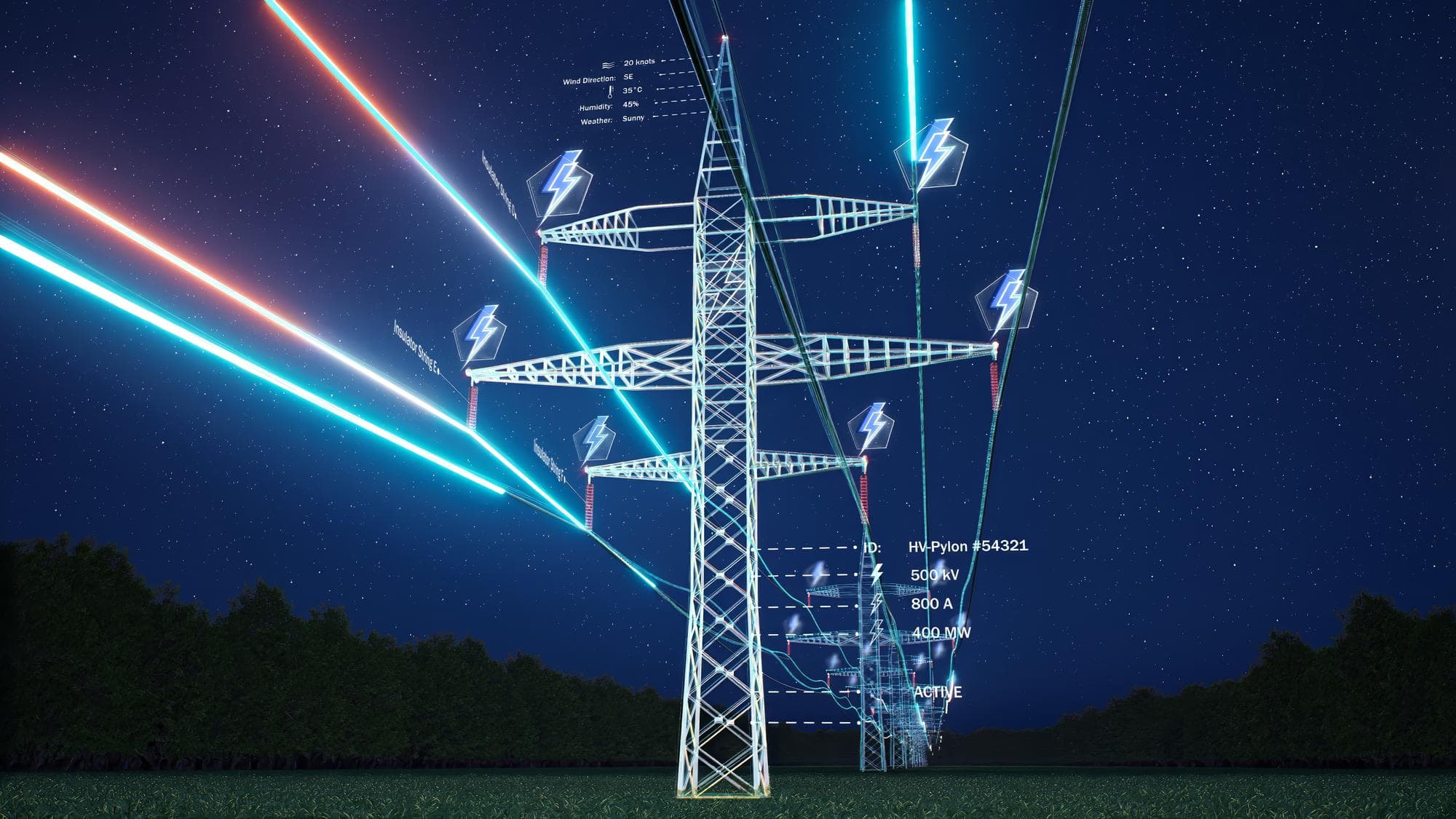
For decades, data centers were designed around a simple energy assumption: the grid would supply power, and on-site systems would exist primarily for backup. Utilities delivered electricity, generators provided redundancy, and energy strategy focused on reliability rather than sourcing.
That model is breaking down.
As power availability becomes the primary bottleneck for digital infrastructure, data centers are rapidly shifting from grid dependence toward varying degrees of energy independence. Private power generation—once considered niche, expensive, or regulatory-heavy—is now accelerating across hyperscale, colocation, and enterprise environments.
This acceleration is not ideological. It is pragmatic. When the grid cannot deliver power on required timelines, or cannot guarantee the reliability demanded by AI workloads, data centers are forced to secure energy on their own terms.
For Data Center Energy (DCE), private power is no longer an edge strategy. It is becoming a core component of how digital infrastructure is planned, financed, and operated.
Grid Dependence Was Viable Only Under Abundance
Grid dependence worked when energy systems had slack.
For years, data center demand represented a small fraction of total load. Utilities could absorb growth incrementally. Transmission and distribution upgrades kept pace. Reliability was high enough that on-site generation was treated as insurance, not primary supply.
AI changes that balance.
Sustained, high-density loads compress grid margins. What once felt like abundance is now revealed as fragile equilibrium. In many regions, utilities simply cannot deliver incremental capacity fast enough to meet demand.
As that reality sets in, dependence becomes risk.
Private Power Solves the Time-to-Energy Problem
The most powerful driver of private power adoption is time.
Grid power is constrained by planning cycles, permitting, and public process. Private power, while still regulated, can often be deployed faster when aligned with site control and capital availability.
When a data center faces a five-year wait for grid interconnection, but can deploy on-site generation in two, the decision becomes straightforward.
Private power compresses the critical path. It restores predictability in a system increasingly defined by delay.
Reliability Requirements Have Escalated Beyond Grid Norms
AI workloads raise the cost of interruption. Training runs can span weeks. Inference pipelines operate continuously. Even brief outages have cascading operational and financial consequences.
While grids are reliable by general standards, they are not designed for zero-tolerance environments. Weather events, load shedding, and transmission faults introduce variability.
Private power allows operators to design reliability from the ground up—controlling redundancy, maintenance windows, and failover logic without reliance on external systems.
For DCE, reliability is no longer an attribute of the grid. It is a design requirement of the facility.
Energy Independence Is Partial, Not Absolute
Energy independence does not mean isolation from the grid. Most data centers pursuing private power adopt hybrid models.
On-site generation supplements grid supply. Microgrids enable islanding during outages. Power purchase agreements secure dedicated generation while remaining grid-connected.
This hybridization reflects realism. The grid remains valuable—but it is no longer sufficient alone.
Private power shifts the balance of control without eliminating interdependence.
Fuel Diversity Is Expanding Rapidly
Early private power strategies relied heavily on diesel and natural gas. Today, the mix is diversifying.
Natural gas plants provide baseload and flexibility. Renewable generation reduces long-term cost and regulatory exposure. Battery storage smooths intermittency. Emerging technologies promise future optionality.
This diversification is not driven by ESG alone. It reflects operational resilience and long-term cost stability.
For DCE planning, fuel strategy becomes as important as capacity planning.
Capital Markets Are Adapting to Energy-Centric Models
Private power requires capital—but capital is increasingly available.
Investors recognize that energy infrastructure underpins digital growth. Financing models now accommodate power plants, microgrids, and energy assets as integral components of data center projects.
In some cases, energy infrastructure is financed separately but aligned contractually with data center operations. In others, it is embedded directly into project economics.
This financial adaptation accelerates private power adoption.
Regulatory Frameworks Are Evolving—Unevenly
Private power exists within regulatory boundaries. Some jurisdictions enable on-site generation easily. Others impose restrictions, emissions limits, or interconnection requirements.
As private power adoption grows, regulatory frameworks are evolving—sometimes proactively, sometimes reactively.
This unevenness influences where energy-independent models proliferate. Markets that enable private power attract more development. Those that resist it risk losing investment.
For DCE strategy, regulatory literacy becomes a competitive advantage.
Private Power Changes the Role of Utilities
Utilities are not being replaced—but their role is changing.
Rather than sole providers, they increasingly act as partners, interconnection facilitators, or backup suppliers. Some utilities even invest directly in on-site or dedicated generation for data centers.
This evolution reflects necessity. As demand outpaces grid expansion, utilities adapt to remain relevant participants in digital infrastructure growth.
Energy Independence Is a Strategic Hedge
At its core, private power is about control.
It hedges against grid delays. It reduces exposure to pricing volatility. It insulates operations from regulatory or political shifts. It enables growth where the grid cannot.
As uncertainty rises, that control becomes invaluable.
Why Private Power Will Continue to Accelerate
Private power adoption is not a temporary workaround. It is a structural response to sustained imbalance between digital demand and energy supply.
Until grids expand faster than AI demand—which is unlikely—energy independence will remain attractive.
For Data Center Energy, this marks a permanent shift. Power strategy is no longer about securing the cheapest kilowatt-hour. It is about securing any kilowatt-hour—reliably, predictably, and on time.
Private power delivers that certainty. And that is why it is accelerating.