Tuesday, February 24, 2026
Grid-Tied vs Private Power Plants: What Data Centers Are Choosing Now
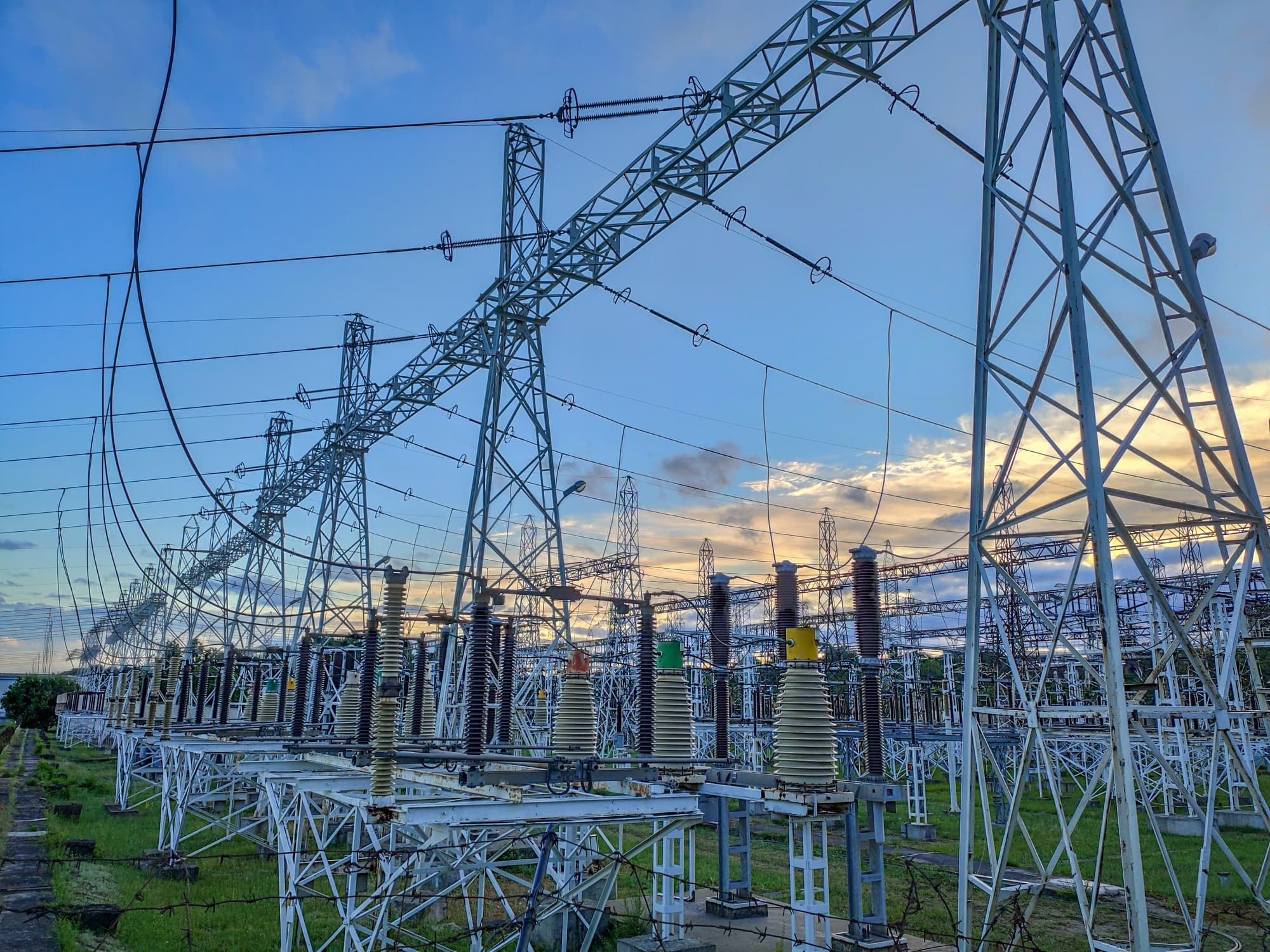
As power constraints tighten and AI workloads redefine reliability requirements, data center operators face a strategic decision that was once largely theoretical: remain primarily grid-tied, or invest in private power plants. This choice now influences not just operating costs, but feasibility, speed to market, and long-term competitiveness.
In earlier cycles, grid power was the default. Private generation existed mainly for backup or in exceptional circumstances. Today, the calculus has changed. Grid limitations, interconnection delays, and power density requirements force operators to evaluate private generation as a primary or co-primary energy source.
For Data Center Energy (DCE), this decision reflects a deeper shift in how digital infrastructure interfaces with the energy ecosystem.
Grid-Tied Power Still Dominates—but With Growing Friction
Grid-tied power remains the most common model. Utilities provide scale, diversity of generation, and regulatory legitimacy. For many regions, the grid remains the most economical and environmentally efficient source of energy.
However, friction is increasing.
Grid-tied models now face:
• Long interconnection timelines
• Capacity uncertainty
• Congestion risk
• Curtailment exposure
• Regulatory intervention
For AI-driven data centers, these frictions introduce unacceptable uncertainty. The grid is reliable in aggregate—but not always reliable enough at the site level.
Private Power Plants Offer Control and Certainty
Private power plants—whether on-site or dedicated off-site facilities—offer a different value proposition: control.
With private generation, operators control:
• Capacity availability
• Energization timing
• Redundancy design
• Power quality
• Fuel sourcing
This control translates into certainty. Projects can move forward without waiting for grid upgrades. Reliability can be engineered precisely. Expansion can be planned around owned assets rather than shared infrastructure.
For DCE, certainty increasingly outweighs simplicity.
Capital Intensity Is the Primary Tradeoff
The most significant drawback of private power is capital intensity.
Building or securing private generation requires substantial upfront investment. Financing, fuel contracts, permitting, and ongoing operations add complexity.
However, this capital must be weighed against opportunity cost. Delayed grid power can stall revenue for years. In many cases, private power enables projects that would otherwise be impossible.
As capital markets adapt, the tradeoff becomes less prohibitive.
Hybrid Models Are Becoming the Default Choice
Rather than choosing exclusively between grid-tied and private power, many data centers adopt hybrid models.
Grid power provides baseline supply. Private generation supplements capacity, ensures reliability, or bridges timing gaps. Storage smooths transitions and mitigates intermittency.
Hybrid systems balance cost, control, and regulatory acceptance. They reduce dependence on any single source while preserving flexibility.
For DCE strategy, hybridization is emerging as the pragmatic middle ground.
AI Workloads Favor Private or Hybrid Power
AI workloads amplify the benefits of private or hybrid power.
Sustained load, sensitivity to interruption, and rapid scaling favor energy systems that can be controlled locally. Private generation reduces exposure to grid events that may be tolerable for other workloads but catastrophic for AI.
As AI penetration increases, private power becomes more attractive even in markets with relatively strong grids.
Regulatory Environments Influence the Decision Heavily
The feasibility of private power depends on regulatory context.
Some jurisdictions encourage on-site generation and microgrids. Others impose emissions limits, fuel restrictions, or interconnection hurdles.
Data centers increasingly factor regulatory posture into site selection. Markets that enable private or hybrid power gain competitive advantage.
For DCE, regulatory navigation is as important as engineering.
Grid Constraints Push Private Power Earlier in the Lifecycle
In previous cycles, private power was considered late—if at all. Now, it is evaluated early in project planning.
Developers assess private generation alongside grid feasibility. In some cases, private power enables land acquisition decisions.
This early consideration reflects recognition that energy strategy defines project viability.
Utilities Are Adapting to the Shift
Utilities are responding to private power adoption in varied ways.
Some collaborate, offering dedicated infrastructure or utility-owned generation. Others resist, concerned about stranded assets or revenue erosion.
Over time, utilities that adapt to hybrid models may retain relevance. Those that do not risk marginalization.
The Choice Is About Risk Allocation
Ultimately, the choice between grid-tied and private power is about risk allocation.
Grid-tied models place risk on utilities and regulators. Private power places risk on operators and investors.
As uncertainty rises, many operators prefer to control risk rather than outsource it.
What This Decision Means for Data Center Energy Strategy
For Data Center Energy, the grid-tied vs private power decision is no longer binary. It is contextual, workload-driven, and market-specific.
The winning strategy is not ideological—it is adaptive.
Data centers that evaluate energy options early, design for flexibility, and align power strategy with workload requirements will continue to scale despite constraints.
Energy Choice Is Now a Strategic Differentiator
Power sourcing decisions now shape competitive positioning.
Grid-tied sites with fast interconnection win where infrastructure exists. Private-powered sites win where it does not. Hybrid sites bridge the gap.
In all cases, energy strategy determines speed, resilience, and growth potential.
For DCE, the future belongs to those who treat power not as a utility—but as core infrastructure to be chosen deliberately.