Saturday, February 21, 2026
High-Density AI Racks Are Forcing New Power Distribution Architectures
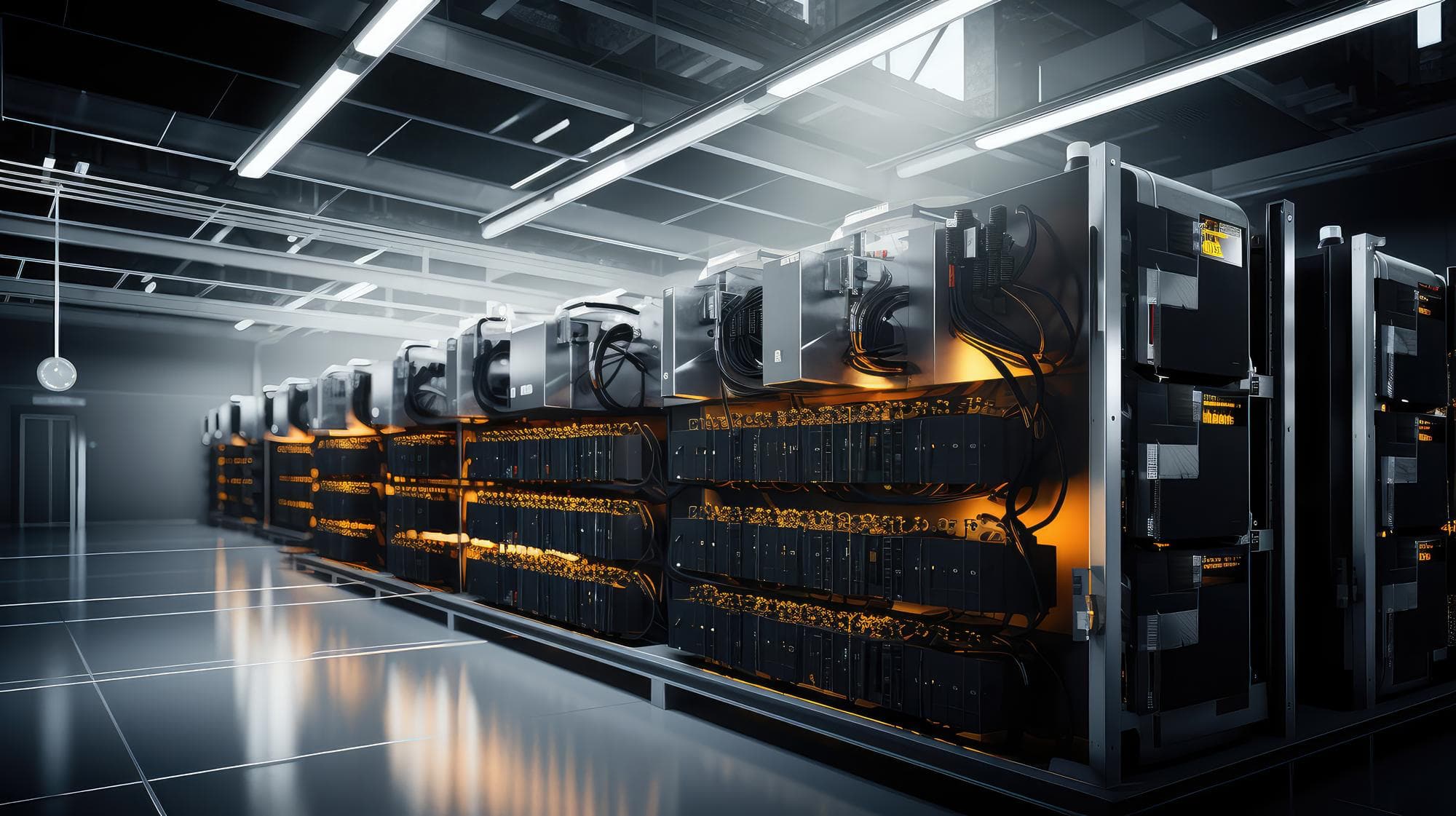
High-density AI racks are not simply scaling existing data center designs—they are breaking them. Power architectures that supported decades of reliable operation under traditional server loads are proving inadequate when confronted with the concentrated, sustained demand of modern AI hardware.
This shift is not incremental. It is architectural.
AI racks drawing tens of kilowatts—or more—per rack fundamentally alter how power must be delivered, distributed, and managed within data centers. Traditional assumptions about redundancy, distribution hierarchy, and spatial layout no longer hold. Power distribution is becoming one of the most complex and decisive design challenges in modern digital infrastructure.
For Data Center Energy (DCE), high-density AI racks mark the end of legacy electrical models and the beginning of a new era of power-first internal architecture.
Traditional Power Distribution Was Designed for Lower Density
Conventional data center power architectures evolved around predictable, relatively low-density loads. Power flowed from utility feeds to main switchgear, through PDUs, and down to racks via standardized pathways.
These systems assumed:
• Moderate per-rack power draw
• Even load distribution across rows
• Significant safety margins
• Gradual density increases
AI racks violate all of these assumptions.
When racks draw multiples of traditional loads, distribution losses increase, thermal stress rises, and equipment ratings are exceeded. Systems designed for flexibility become points of failure.
Concentrated Load Changes Everything
High-density AI racks concentrate power in small physical footprints.
This concentration increases:
• Fault current levels
• Heat generation near distribution equipment
• Voltage drop risk
• Complexity of redundancy design
Power can no longer be treated as a facility-wide average. It must be engineered at the rack and row level with precision.
Distribution becomes localized rather than generalized.
Busway and Direct-to-Rack Solutions Are Gaining Ground
To handle high-density loads, data centers increasingly deploy busway systems and direct-to-rack power delivery.
These approaches reduce distribution distance, minimize losses, and improve scalability. They also enable flexible reconfiguration as rack densities evolve.
Busway replaces traditional overhead cabling in many AI halls. Direct liquid-cooled power modules bring energy closer to compute.
These solutions reflect a shift toward modular, localized distribution.
Redundancy Models Must Be Reimagined
Traditional redundancy models assumed that failure at one level could be absorbed elsewhere. High-density racks reduce this margin.
A single distribution fault can impact large amounts of compute concentrated in one area. Redundancy must therefore be designed at finer granularity.
This leads to:
• More localized redundancy zones
• Increased component count
• Higher capital investment per megawatt
Redundancy is no longer a blanket strategy—it is surgical.
Electrical Rooms Are Expanding and Multiplying
High-density power distribution requires more electrical infrastructure closer to the load.
Electrical rooms grow in size and number. Transformers, switchgear, and protection systems move closer to racks to manage fault current and thermal load.
This expansion affects building layout, structural design, and usable floor space. Electrical infrastructure becomes a dominant spatial driver.
For DCE, this reinforces the primacy of energy systems in facility design.
Power Quality Becomes Harder to Maintain
High-density AI hardware is sensitive to power quality issues.
Rapid load changes, harmonic distortion, and transient events increase under dense conditions. Maintaining voltage stability requires advanced monitoring and control.
Power distribution architectures must incorporate power conditioning, real-time monitoring, and adaptive protection.
This elevates power quality from a utility concern to an internal engineering challenge.
Cooling and Power Distribution Become Interdependent
At high density, power distribution and cooling cannot be designed independently.
Heat rejection affects electrical equipment performance. Liquid cooling systems influence rack layout and power routing. Failures in one system impact the other.
Design teams must coordinate power and cooling as a single integrated system.
For DCE, this convergence increases design complexity but improves overall resilience when executed correctly.
Distribution Architectures Must Anticipate Future Density
One of the greatest challenges is uncertainty. AI rack densities continue to increase.
Designing distribution systems that can scale without complete replacement becomes critical. Overbuilding today may be more economical than retrofitting tomorrow.
This future-proofing mindset increases upfront cost but reduces long-term disruption.
Standards and Best Practices Are Lagging Reality
Industry standards evolve slowly. AI hardware evolves quickly.
Power distribution architectures are advancing faster than codes and best practices. This creates uncertainty and forces engineers to operate at the edge of established norms.
Close collaboration with AHJs, utilities, and equipment manufacturers becomes essential.
What This Means for Data Center Energy Strategy
High-density AI racks force a rethinking of internal energy architecture.
For DCE, key implications include:
• Power distribution is now a core differentiator
• Electrical design must lead facility planning
• Capital intensity per megawatt will increase
• Operational risk concentrates at the rack level
Facilities that fail to adapt will face performance limits and reliability issues.
AI Density Is Redefining the Inside of the Data Center
While much attention focuses on grid constraints and generation, the most dramatic energy transformation is happening inside the data center.
High-density AI racks are rewriting power distribution from the ground up. The facilities that succeed will be those that treat internal energy architecture as strategic infrastructure—not just engineering detail.