Wednesday, March 4, 2026
How Power Quality and Stability Impact AI Performance
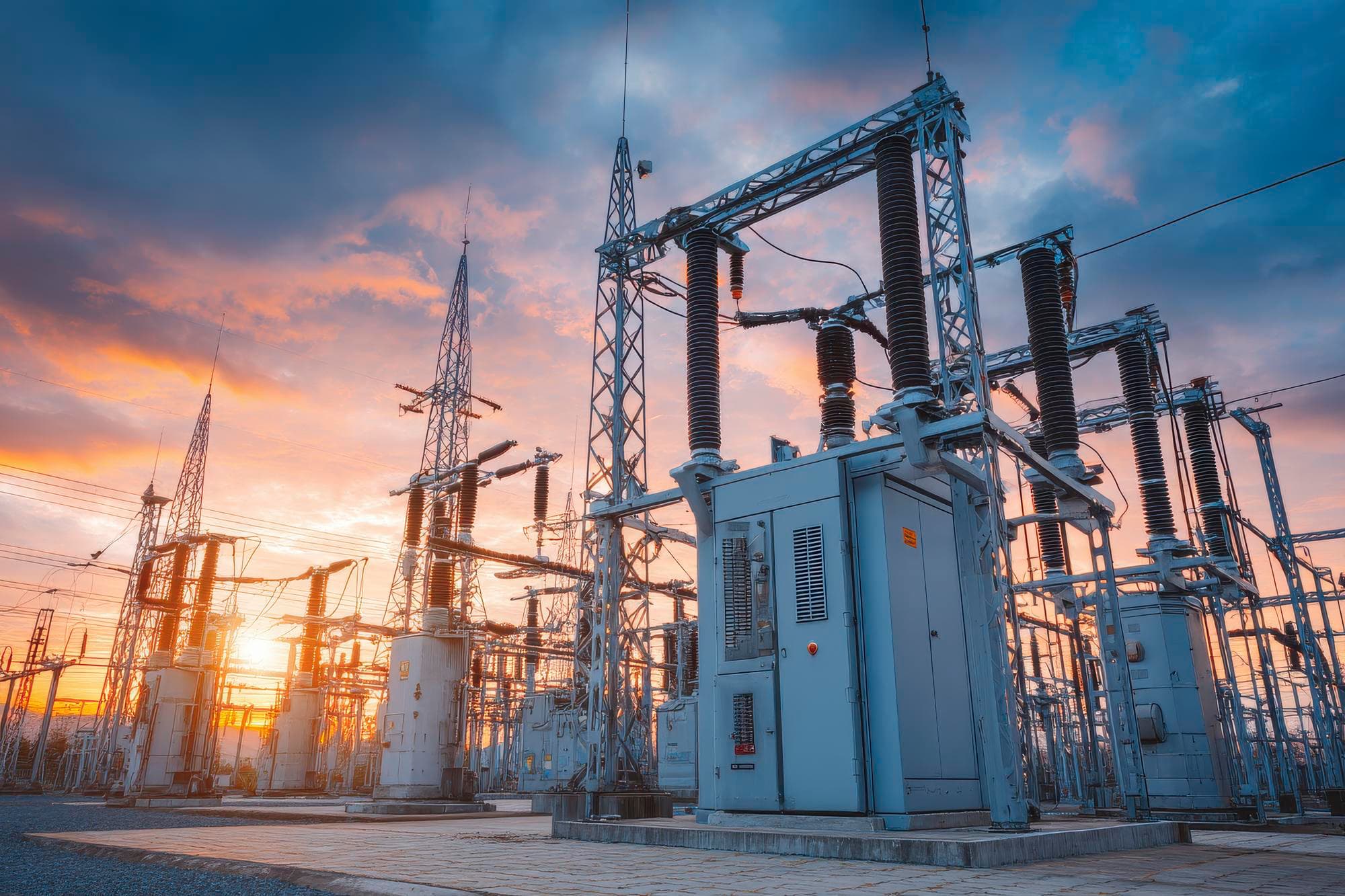
Power availability gets most of the attention in data center planning, but for AI workloads, availability alone is not enough. Power quality and stability increasingly determine whether AI systems perform as designed, degrade silently, or fail outright. As AI infrastructure scales in density and complexity, the tolerance for electrical imperfection collapses.
AI hardware does not behave like traditional enterprise IT. GPUs, accelerators, and high-speed interconnects operate at extreme utilization, rely on precise timing, and generate intense thermal and electrical feedback loops. Even minor power disturbances—events that legacy workloads would ignore—can disrupt performance, reduce output, or shorten equipment life.
As a result, power quality has moved from an electrical engineering detail to a core performance variable in AI infrastructure.
AI Hardware Is Electrically Sensitive by Design
Modern AI hardware operates at the edge of physical limits.
GPUs draw large amounts of current with rapid fluctuations. Power delivery components respond in microseconds. Voltage margins are tight, and tolerances shrink with each new hardware generation.
This sensitivity is not a flaw—it is a consequence of maximizing performance per watt. But it means AI systems respond immediately to power instability.
What once caused negligible inefficiency now causes measurable performance impact.
Voltage Fluctuations Reduce Training Efficiency
Training workloads are long-running and tightly synchronized. Voltage sags, even brief ones, can interrupt computation, force retries, or trigger protective throttling.
These events may not cause visible outages, but they degrade throughput. Training jobs take longer. Compute efficiency drops. Energy cost per output increases.
Over time, these inefficiencies accumulate into material performance loss.
Stable voltage is not just about uptime—it is about sustained productivity.
Frequency Deviations Affect Timing-Sensitive Operations
AI systems depend on precise timing across thousands of parallel processes.
Frequency deviations—even within nominal grid tolerance—can introduce timing drift that disrupts synchronization. This is particularly impactful in distributed training and inference clusters where consistency matters.
The result may be subtle: reduced scaling efficiency, increased latency, or inconsistent output.
These issues are difficult to diagnose because systems remain “online” while performance quietly erodes.
Power Quality Directly Influences Hardware Lifespan
Electrical instability accelerates hardware degradation.
Harmonics, voltage spikes, and thermal cycling stress power delivery components, GPUs, and supporting electronics. Over time, this stress increases failure rates and reduces usable lifespan.
For AI infrastructure, where hardware costs are high and refresh cycles are aggressive, premature degradation carries significant financial impact.
Power quality becomes a capex protection mechanism.
AI Inference Is Especially Vulnerable to Instability
Inference workloads are often latency-sensitive and user-facing.
Power instability introduces jitter, latency spikes, or brief service interruptions that degrade user experience. In real-time applications—autonomous systems, financial decisioning, industrial control—even minor instability can create risk.
Inference environments therefore demand exceptionally stable power behavior, often exceeding grid norms.
Traditional Grid Power Was Not Designed for AI Sensitivity
Public grids are engineered for aggregate reliability, not micro-level precision.
They tolerate brief sags, switching events, and harmonic noise within regulated thresholds. For most loads, this is sufficient.
AI workloads operate below those thresholds.
As density increases, the mismatch between grid tolerance and AI sensitivity becomes more pronounced. What is “acceptable” power quality for the grid may be suboptimal—or damaging—for AI systems.
Internal Power Distribution Amplifies Quality Issues
Power quality issues often originate upstream—but they are amplified internally.
High-density distribution, long electrical paths, and shared infrastructure increase exposure to harmonics, imbalance, and transient events.
Without careful design, internal systems propagate instability rather than absorb it.
This places greater emphasis on internal power conditioning and monitoring.
Energy Storage Plays a Quality Role, Not Just Backup
Energy storage systems increasingly function as power quality stabilizers.
Batteries smooth voltage fluctuations, absorb transients, and isolate sensitive loads from upstream disturbances. In AI environments, storage becomes an active conditioning layer rather than a passive backup.
This role expands the justification for storage beyond resilience alone.
Power Monitoring Becomes Performance Monitoring
As power quality affects AI output, monitoring electrical behavior becomes a form of performance monitoring.
Operators track voltage stability, harmonic distortion, and transient events alongside compute metrics. Correlating power data with performance anomalies improves diagnosis and optimization.
Energy telemetry becomes part of the AI operations stack.
Poor Power Quality Creates Hidden Performance Costs
One of the most dangerous aspects of power quality issues is invisibility.
Systems remain online. SLAs appear intact. Yet performance per watt declines, hardware ages faster, and operational costs rise.
These hidden costs are often misattributed to software inefficiency or hardware limitations when the root cause is electrical.
Without deliberate measurement, they persist unnoticed.
AI Density Shrinks Tolerance Further
As AI density increases, tolerance shrinks.
Higher current levels magnify the impact of small deviations. Thermal-electrical feedback loops intensify. Protective throttling becomes more aggressive.
What was once manageable becomes unacceptable at scale.
This trend ensures that power quality will matter more, not less, over time.
Power Stability Shapes Site and Design Decisions
Facilities increasingly factor power quality into site selection and design.
Locations with stable grids, low disturbance frequency, and strong power quality records gain advantage. Internally, designs prioritize short distribution paths, segmented loads, and advanced conditioning.
Power stability becomes a competitive differentiator.
The Performance Ceiling Is Electrically Defined
There is a ceiling to AI performance that software and hardware alone cannot overcome.
That ceiling is set by power quality.
Unstable power limits utilization, increases error rates, and constrains scaling. Stable power enables systems to operate closer to theoretical maximums.
In high-density AI environments, electrical behavior defines the performance envelope.
AI Performance Depends on Invisible Infrastructure
The industry often focuses on visible components: GPUs, networks, cooling systems.
Power quality infrastructure remains largely invisible—until it fails.
As AI systems grow more sensitive and valuable, this invisible layer becomes mission-critical.
Performance is no longer determined solely by compute capability.
It is determined by how cleanly, consistently, and predictably power reaches every rack, every second.