Tuesday, December 16, 2025
Hybrid Power Architectures: How Data Centers Are Blending Grid, On-Site, and Renewable Energy
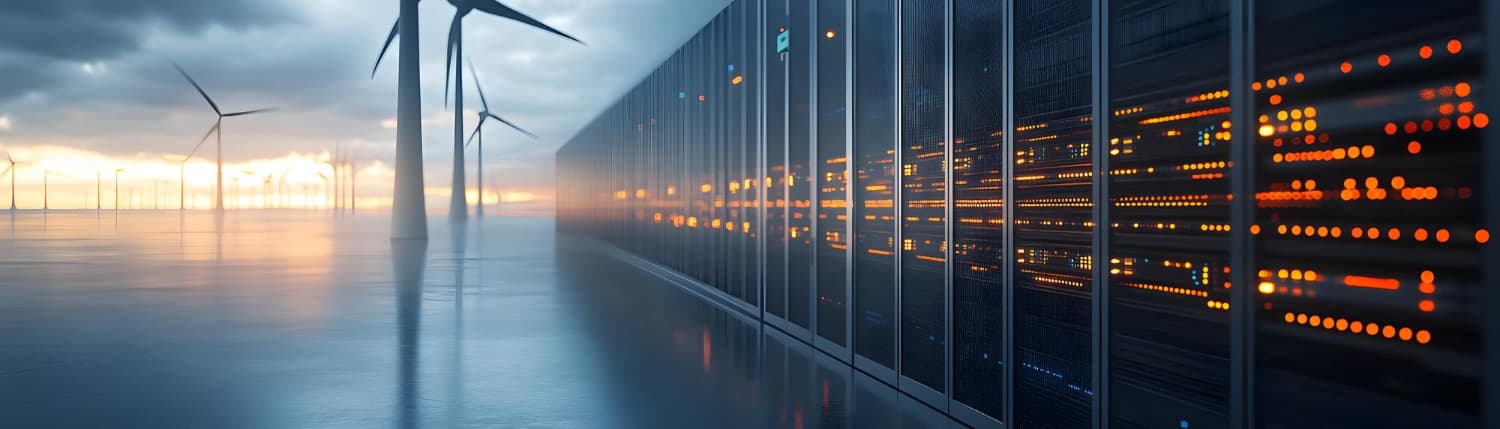
The End of Single-Source Power for Data Centers
For decades, data centers were designed around a simple energy assumption: the grid would deliver reliable power at scale, and backup systems would handle short-term outages. That model is no longer sufficient.
AI workloads, hyperscale expansion, and high-density computing have pushed energy demand beyond what many grids can reliably deliver on their own. At the same time, sustainability requirements, regulatory pressure, and resilience expectations have intensified.
The result is a fundamental shift in how data centers source and manage power. Hybrid power architectures — blending grid electricity, on-site generation, energy storage, and renewables — are rapidly becoming the default energy model for modern data centers.
This is not an experimental phase. It is a structural transformation in digital energy infrastructure.
Why the Traditional Grid-Only Model Is Breaking Down
The grid was designed for diversity of load, not concentration. Residential, commercial, and industrial demand historically balanced one another, smoothing peaks and valleys. AI-driven data centers disrupt this balance.
Modern data center energy profiles are characterized by:
- Sustained, flat, high-load consumption
- Rapid ramp-up of megawatt demand
- Minimal tolerance for voltage instability
- Zero tolerance for unplanned downtime
In many regions, grids face:
- Congestion at substations
- Transmission bottlenecks
- Long interconnection queues
- Aging infrastructure
- Regulatory delays
Even where generation exists, delivery capacity is often constrained. The grid alone cannot meet the reliability, scale, and speed requirements of AI-era data centers.
What Defines a Hybrid Power Architecture
A hybrid power architecture integrates multiple energy sources and control systems into a unified, flexible platform. Rather than relying on a single supply path, data centers design layered energy systems that can adapt to demand, outages, and grid limitations.
Core components typically include:
- Utility grid power as a baseline
- On-site generation for capacity and reliability
- Battery energy storage systems (BESS)
- Renewable energy sources
- Intelligent energy management systems
The goal is not to replace the grid, but to augment and stabilize it, while ensuring data center operations remain uninterrupted.
On-Site Generation: From Backup to Primary Resource
Historically, on-site generation existed solely as emergency backup. Today, it plays a far more active role.
On-site generation is increasingly used to:
- Supplement grid capacity
- Reduce reliance on constrained substations
- Provide power during peak grid stress
- Support rapid expansion timelines
Common technologies include:
- Natural gas turbines
- Reciprocating engines
- Modular generation units
- Hydrogen-ready systems
These systems can be designed for continuous or semi-continuous operation, fundamentally changing the energy profile of data centers.
Why On-Site Power Is Accelerating Now
Several forces are driving adoption:
- Grid interconnection delays stretching multiple years
- AI workloads requiring immediate capacity
- Rising outage risk due to weather and grid stress
- The need for predictable, dispatchable power
In many cases, on-site generation allows data centers to deploy capacity years earlier than grid-only approaches would permit.
Energy Storage as the Backbone of Hybrid Systems
Battery energy storage has become a cornerstone of hybrid power architectures.
Storage enables:
- Load balancing and peak shaving
- Backup power during transitions
- Support for renewable intermittency
- Grid stabilization services
For data centers, storage bridges the gap between variable generation and constant load, making hybrid systems viable at scale.
As battery technology improves and costs decline, storage capacity per site continues to grow, enabling more sophisticated energy strategies.
The Role of Renewable Energy in Hybrid Architectures
Renewables are a critical component — but not a standalone solution.
Solar and wind provide:
- Emissions reduction
- Cost stabilization
- Regulatory alignment
- Long-term sustainability benefits
However, AI workloads demand power 24/7, while renewables are inherently intermittent. Hybrid architectures solve this by combining renewables with storage, on-site generation, and grid power.
The result is a balanced system that delivers reliability without abandoning sustainability goals.
Energy Management Systems: The Brain of the Hybrid Model
Hybrid power architectures depend on advanced control systems capable of orchestrating multiple energy sources in real time.
Modern energy management platforms enable:
- Dynamic source switching
- Load forecasting and optimization
- Real-time grid interaction
- Automated resilience responses
- Cost-aware power dispatch
These systems turn energy from a static utility input into an actively managed operational resource.
Microgrids and Islanding Capability
Many hybrid architectures are designed as microgrids, capable of operating independently from the main grid when necessary.
Islanding capability provides:
- Protection from grid outages
- Operational continuity during extreme events
- Flexibility during grid upgrades
- Greater control over power quality
For mission-critical AI workloads, the ability to operate autonomously is increasingly seen as essential rather than optional.
Hybrid Power and AI Workload Alignment
AI workloads are particularly well suited to hybrid energy models.
Training clusters benefit from:
- Stable, high-capacity power
- Predictable availability
- Reduced exposure to grid congestion
Inference workloads benefit from:
- Local resilience
- Distributed generation
- Latency-sensitive power stability
Hybrid architectures allow energy systems to align with workload characteristics, improving efficiency and reliability.
Regulatory and Policy Considerations
Hybrid power systems sit at the intersection of energy regulation, environmental policy, and digital infrastructure planning.
Key considerations include:
- Permitting for on-site generation
- Emissions regulations
- Grid interconnection rules
- Energy market participation
- Incentives for storage and renewables
In many regions, regulatory frameworks are evolving to accommodate hybrid models, recognizing their role in grid resilience.
Global Adoption Patterns
Hybrid power adoption varies globally based on grid maturity and policy environment.
- Regions with congested grids adopt hybrid systems out of necessity
- Regions with strong sustainability mandates integrate renewables more aggressively
- Emerging markets leverage hybrid power to overcome grid instability
Despite differences, the trend is universal: single-source power models are disappearing.
Cost, Risk, and Long-Term Economics
Hybrid architectures require higher upfront investment but offer long-term benefits:
- Reduced downtime risk
- Greater energy cost predictability
- Faster deployment timelines
- Improved grid independence
As AI workloads scale, these benefits increasingly outweigh initial complexity.
Energy Strategy as a Competitive Advantage
Energy architecture now directly impacts:
- Deployment speed
- Operational reliability
- Scalability
- Regulatory alignment
Data centers with hybrid power systems are better positioned to support next-generation workloads and adapt to future energy constraints.
The Future: Hybrid as the Standard, Not the Exception
Looking toward 2030, hybrid power architectures are expected to become the baseline for large-scale data centers.
Future systems will likely feature:
- Larger on-site generation capacity
- Expanded storage deployments
- Smarter energy orchestration
- Deeper integration with grid services
Energy systems will evolve alongside compute, becoming more flexible, intelligent, and resilient.
Energy Architecture Is Now Digital Infrastructure
Hybrid power architectures represent a fundamental shift in how data centers engage with energy.
By blending grid power, on-site generation, renewables, and storage, data centers are transforming from passive consumers into active participants in energy systems.
In the AI era, energy architecture is no longer an operational detail — it is a strategic pillar of digital infrastructure.
The data centers that thrive in the next decade will not be those with the most servers, but those with the most resilient, flexible, and intelligent power systems.