Saturday, March 14, 2026
Hybrid Power Systems Are Becoming the New Standard for Data Centers
For most of the data center industry’s history, power architecture followed a simple hierarchy: grid power as primary supply, generators as backup, and UPS systems to bridge outages. This model assumed a reliable grid, predictable demand, and infrequent disruptions.
That model is no longer sufficient.
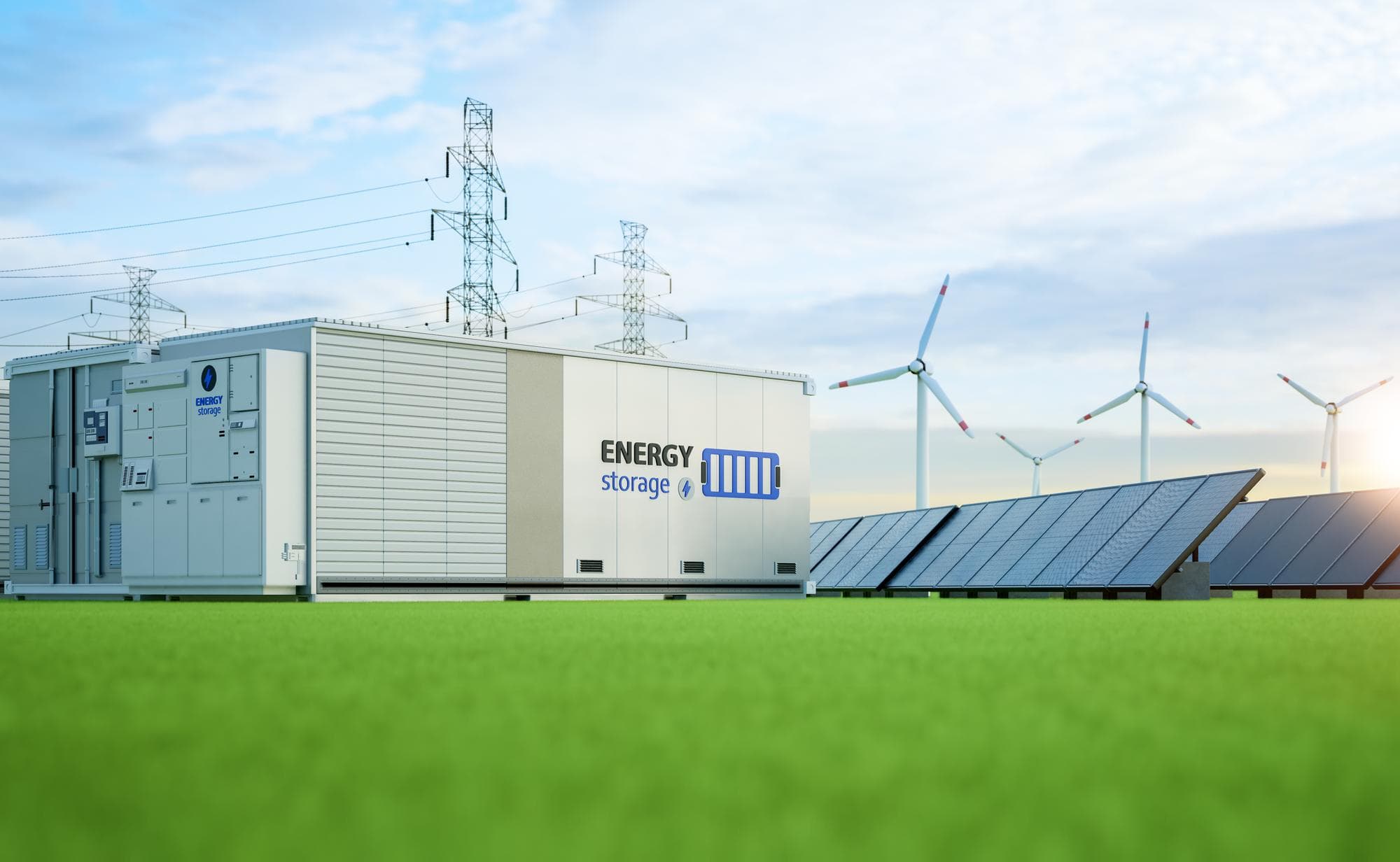
As AI workloads push power density higher, grid constraints intensify, and uptime expectations approach zero tolerance, hybrid power systems are emerging as the new standard for data centers. These systems blend grid power, on-site generation, renewable supply, and energy storage into a coordinated architecture designed for resilience, scalability, and control.
For Data Center Energy (DCE), hybrid power is not an experimental approach. It is the natural response to an energy environment that can no longer meet digital infrastructure needs through any single source alone.
Single-Source Power Models Cannot Meet Modern Requirements
Grid-only models struggle with availability and timing. Generator-only solutions are inefficient and emissions-heavy. Renewable-only systems face intermittency challenges.
Each power source solves one problem while introducing another.
Hybrid systems exist because modern data centers must solve multiple problems simultaneously: capacity, reliability, predictability, sustainability, and speed to deployment. No single energy source can satisfy all five at scale.
Hybrid architectures integrate strengths while mitigating weaknesses.
AI Workloads Demand Continuous, Deterministic Power
AI workloads expose the limitations of legacy redundancy models. Training and inference systems operate continuously, often at high utilization, with little tolerance for disruption.
Hybrid power systems support deterministic power delivery by layering sources. If grid power falters, on-site generation sustains load. If generation transitions, storage bridges gaps. Control systems orchestrate the sequence.
This orchestration transforms resilience from passive backup into active management.
Grid Power Becomes One Layer, Not the Foundation
In hybrid systems, the grid remains important—but no longer foundational.
Grid power supplies baseline energy when available. Hybrid architectures assume the grid may be constrained, delayed, or interrupted. Design no longer depends on perfect grid behavior.
This shift reframes grid dependence. Instead of designing around grid reliability, hybrid systems design around grid variability.
For DCE, this is a philosophical change as much as a technical one.
On-Site Generation Moves From Emergency to Operational
In traditional models, on-site generation existed solely for emergencies. In hybrid systems, generation becomes operational.
Gas turbines, reciprocating engines, or other on-site plants may run regularly to supplement grid supply, manage peaks, or support expansion ahead of grid upgrades.
This operational role requires different design assumptions: fuel logistics, emissions management, maintenance cycles, and regulatory compliance all become part of normal operations.
Hybrid systems normalize on-site generation as a first-class energy source.
Renewable Energy Becomes a Core Component
Renewables integrate naturally into hybrid architectures.
Solar, wind, or other renewable sources provide low-cost, long-term supply. Storage smooths intermittency. Grid and generation fill gaps.
This integration allows data centers to scale renewable usage without compromising reliability.
In hybrid systems, sustainability and operability reinforce each other rather than compete.
Energy Storage Enables System Coordination
Energy storage is the connective tissue of hybrid power systems.
Batteries absorb excess generation, support load during transitions, and stabilize power quality. They enable seamless switching between sources without disruption to workloads.
As storage costs decline and performance improves, its role expands from UPS replacement to system-level orchestrator.
For DCE strategy, storage is no longer optional—it is foundational.
Hybrid Systems Shorten Time-to-Power
One of the most practical benefits of hybrid power is speed.
Grid upgrades take years. Hybrid systems allow data centers to deploy capacity earlier using on-site generation and storage while grid infrastructure catches up.
This staged approach aligns energy delivery with construction schedules, reducing stranded assets and accelerating revenue.
Hybrid power compresses the critical path.
Utilities Are Gradually Adapting to Hybrid Models
Utilities increasingly encounter hybrid-powered data centers and adapt their planning accordingly.
Some utilities collaborate on hybrid designs. Others revise interconnection standards. Many recognize that hybrid systems reduce grid stress by managing peak loads locally.
While regulatory alignment varies, hybrid systems are becoming more accepted as part of the energy ecosystem.
Hybrid Power Redefines Risk Allocation
Hybrid architectures redistribute risk.
Instead of concentrating risk within the grid or on-site systems alone, risk is diversified across multiple sources. Failure in one layer does not cascade through the entire system.
This diversification improves resilience and predictability—critical attributes for AI-driven infrastructure.
Capital Markets Are Supporting Hybrid Energy Investment
Capital markets increasingly support hybrid energy infrastructure as integral to data center value.
Investors understand that hybrid systems reduce execution risk, improve uptime, and enable faster deployment. Financing structures evolve to accommodate energy assets alongside digital infrastructure.
This financial support accelerates adoption.
What Hybrid Power Means for Data Center Energy Strategy
For Data Center Energy, hybrid power systems redefine best practice.
• Energy strategy becomes multi-layered
• Power reliability is actively managed
• Expansion aligns with energy availability
• Sustainability integrates with operations
Hybrid power is not about redundancy—it is about adaptability.
Hybrid Power Is the New Baseline
Hybrid power systems are not emerging because the industry prefers complexity. They are emerging because simplicity no longer works. The assumption that a single energy source—no matter how reliable historically—can support AI-era infrastructure has proven false. Hybrid architectures are the industry’s acknowledgement that power is now dynamic, constrained, and strategic.
What matters going forward is not whether a data center is grid-connected, renewable-backed, or privately powered. What matters is whether its energy system can adapt in real time to constraint, scale, and uncertainty. Hybrid power delivers that adaptability. It allows operators to build before the grid is ready, scale faster than utilities can expand, and operate independently when conditions demand it.
In this environment, “energy-ready” no longer means having a utility letter or a backup generator. It means having a layered system that can absorb volatility, manage transition, and sustain AI workloads without interruption. Hybrid power is becoming the baseline because it is the only model that aligns digital ambition with energy reality.
For Data Center Energy, the conclusion is unavoidable: the future will not be powered by one solution, one source, or one grid. It will be powered by systems designed to assume constraint—and succeed anyway.