Tuesday, December 16, 2025
Inside the Surge of Billion-Dollar Energy Investments Triggered by Data Center Demand
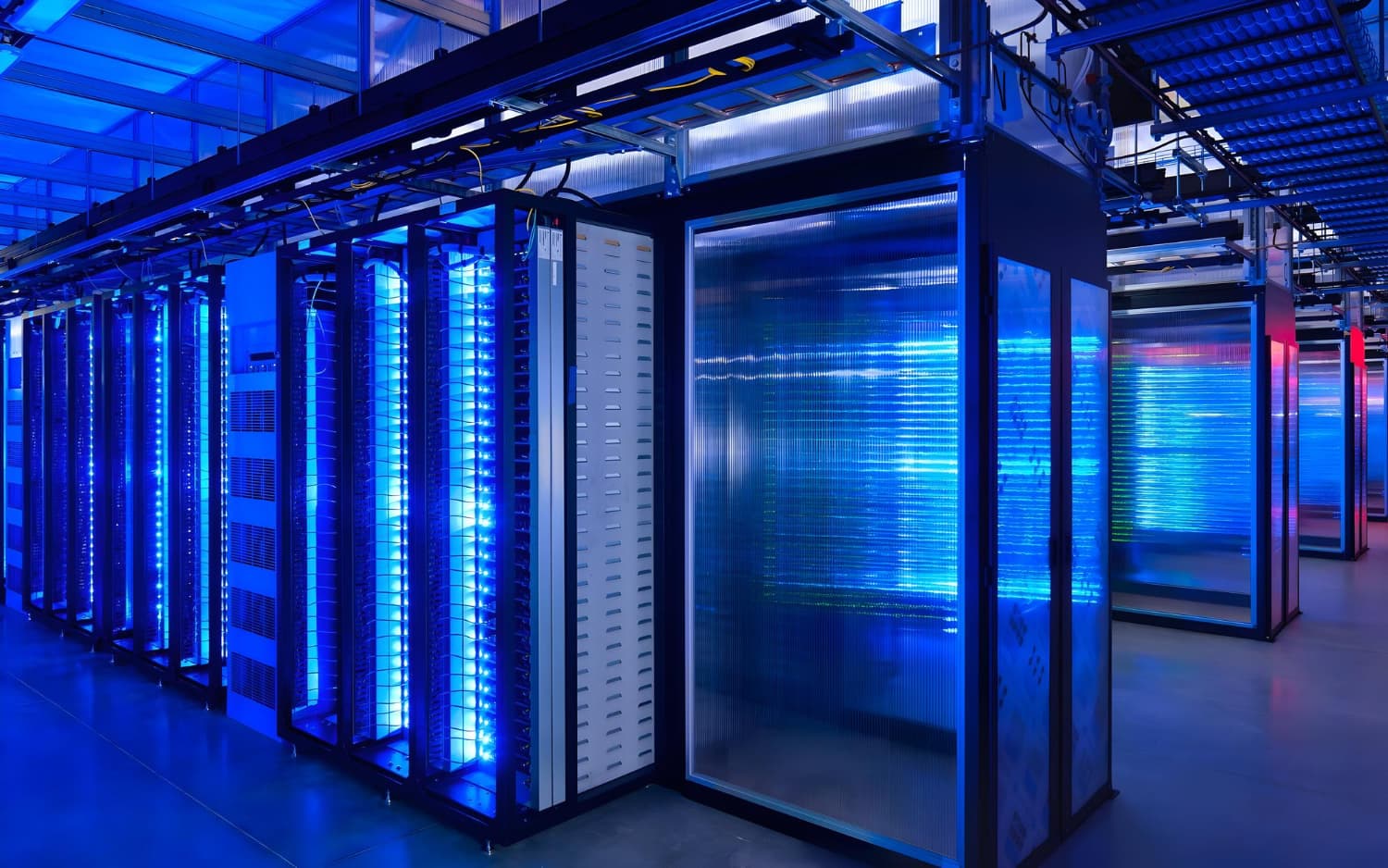
The Investment Boom Happening Behind the Data Center Boom
The global data center expansion has become one of the defining infrastructure stories of the decade. Yet much of the attention remains focused on buildings, capacity announcements, and hyperscale expansion plans. What receives far less visibility is where the largest checks are actually being written.
Behind nearly every major data center announcement sits a parallel — and often larger — wave of energy infrastructure investment. Power generation, transmission, substations, grid reinforcement, and storage projects are absorbing billions in capital, driven directly by the explosive energy demands of AI, cloud computing, and digital services.
This is not a secondary effect. Data centers have become one of the most powerful demand signals in global energy markets, triggering investment decisions that reshape regional grids, national energy strategies, and long-term capital allocation.
Why Data Centers Have Become Energy Market Catalysts
Historically, energy investment responded to population growth, industrial expansion, and electrification trends. Today, data centers have joined — and in some regions surpassed — traditional industrial demand drivers.
Several characteristics make data centers uniquely influential:
- Exceptionally large and predictable loads
- Long-term demand commitments
- Concentrated geographic impact
- Near-zero tolerance for power instability
- Rapid scaling timelines
Unlike many industries, data centers do not fluctuate significantly with economic cycles. Once deployed, their demand is steady and persistent. For energy investors, this predictability is invaluable.
As AI workloads grow more power-intensive, data centers now justify energy projects that would not have moved forward under traditional demand forecasts.
The Scale of Investment: From Millions to Billions
Energy investments tied to data center demand have grown dramatically in both size and scope. What once involved incremental upgrades now includes:
- Large-scale generation plants
- Multi-year transmission expansion programs
- Dedicated substations and feeders
- Grid-scale battery storage deployments
- Regional grid modernization initiatives
These are not marginal expenditures. Many projects now exceed hundreds of millions or billions of dollars, often justified explicitly by current or anticipated data center demand.
In several regions, data centers have become the anchor customers that make these investments economically viable.
Generation Projects Accelerated by Digital Demand
New generation capacity is one of the most visible outcomes of data center-driven investment.
AI workloads demand:
- High reliability
- Dispatchable capacity
- Continuous availability
This has accelerated investment into generation sources capable of meeting those requirements, often with hybrid configurations.
Key trends include:
- New gas-fired plants designed for digital infrastructure loads
- Renewable generation paired with firming mechanisms
- Capacity expansions at existing generation sites
- Long-term power agreements aligned with data center timelines
In many cases, these projects would not proceed without the guaranteed demand provided by data center customers.
Transmission: Unlocking Stranded Power
While generation often exists, the ability to move power to data center corridors is frequently limited. Transmission investment has therefore become a critical focus.
Across multiple regions, energy investment is targeting:
- High-voltage transmission lines
- Grid interconnections between regions
- Reinforcement of overloaded corridors
- New delivery paths into digital hubs
Transmission projects are capital-intensive and politically complex, but data center demand has provided the urgency needed to push them forward.
Without these investments, generation capacity remains underutilized and data center growth stalls.
Substations: The Bottleneck Within the Grid
Substations represent one of the most constrained — and fastest-growing — investment categories.
Modern data centers often require:
- Dedicated substations
- Custom voltage configurations
- Redundant feeds
- Expansion-ready capacity
Substation construction timelines have lengthened due to equipment shortages and permitting complexity. In response, investment is surging to expand substation capacity in strategic digital corridors.
In some markets, the availability of substation capacity now dictates which regions can support future data center growth.
Grid Modernization and Resilience Investments
AI-driven loads place unprecedented stress on aging grid infrastructure. To maintain stability, investment is flowing into grid modernization initiatives, including:
- Advanced monitoring and control systems
- Grid automation technologies
- Resilience upgrades for extreme weather
- Load management and forecasting tools
These investments are not optional. High-density digital loads amplify the consequences of grid failure, making resilience a central concern for utilities and regulators alike.
The Role of Energy Storage in Supporting Data Center Demand
Battery energy storage systems (BESS) have become a key component of energy investment strategies tied to data centers.
Storage provides:
- Load smoothing
- Backup power
- Grid stabilization
- Support for renewable integration
As AI workloads create sustained, high-load conditions, storage investments help mitigate peak demand stress and enhance reliability.
Many energy projects now include storage as a standard component, particularly where grid flexibility is limited.
Private Capital Enters the Energy Equation
The scale and urgency of data center-driven energy investment have attracted significant private capital.
Infrastructure funds, private equity firms, and institutional investors are increasingly active in:
- Generation assets
- Transmission projects
- Substation financing
- Energy storage deployments
These investors are drawn by:
- Long-term contracted revenue
- Anchor tenants with strong credit profiles
- Essential-service characteristics
- Inflation-linked returns
Data centers reduce demand risk, making energy infrastructure a more attractive investment proposition.
Utilities Adapt to a New Demand Reality
Utilities are adjusting their planning models to account for data centers as primary growth drivers rather than incremental loads.
This includes:
- Revising long-term demand forecasts
- Prioritizing digital corridors for investment
- Accelerating permitting and approvals
- Exploring partnerships with private capital
In many regions, utilities now view data centers as strategic customers whose presence justifies large-scale infrastructure expansion.
Policy and Government Support Accelerate Investment
Governments recognize that energy infrastructure underpins digital competitiveness.
As a result, policy measures increasingly:
- Fast-track approvals for energy projects tied to data centers
- Provide incentives for grid expansion
- Support domestic energy production
- Encourage public-private collaboration
Energy investment has become a tool of national digital strategy, particularly as AI competitiveness becomes a geopolitical priority.
Regional Variations in Energy Investment Patterns
While the trend is global, investment patterns vary by region:
- Some regions focus on generation expansion
- Others prioritize transmission upgrades
- Some emphasize storage and resilience
- Others pursue integrated, multi-layer grid investment
These differences reflect local grid conditions, regulatory environments, and energy resource availability.
Risks and Constraints Facing Energy Investment
Despite the surge, energy investment faces real challenges:
- Equipment shortages
- Skilled labor constraints
- Regulatory complexity
- Community opposition
- Long development timelines
Managing these risks is essential to ensuring that investment translates into usable capacity.
What the Investment Surge Means for the Data Center Industry
For data center operators, the energy investment boom changes the expansion equation.
Growth will increasingly favor regions where:
- Energy investment is aligned with digital demand
- Utilities and capital move quickly
- Grid capacity scales predictably
- Long-term power certainty exists
Regions that fail to attract energy investment risk losing digital infrastructure growth to better-prepared markets.
Energy Investment as a Competitive Differentiator
As energy infrastructure becomes more unevenly distributed, it will shape global competitiveness.
Markets with strong energy investment pipelines will:
- Attract AI infrastructure
- Support cloud expansion
- Enable digital innovation
Those without will face stagnation.
Data Centers Are Reshaping Energy Capital Flows
The surge in billion-dollar energy investments is not incidental — it is a direct response to data center demand.
As AI and cloud workloads continue to scale, energy infrastructure will absorb increasing amounts of capital, reshaping grids, markets, and investment priorities worldwide.
Data centers have become more than energy consumers.
They are now energy market drivers.
The future of digital infrastructure will be decided as much in power plants and substations as in server halls and data centers.