Thursday, March 12, 2026
Multi-Tenant Facilities Are Re-Engineering Power Redundancy Models
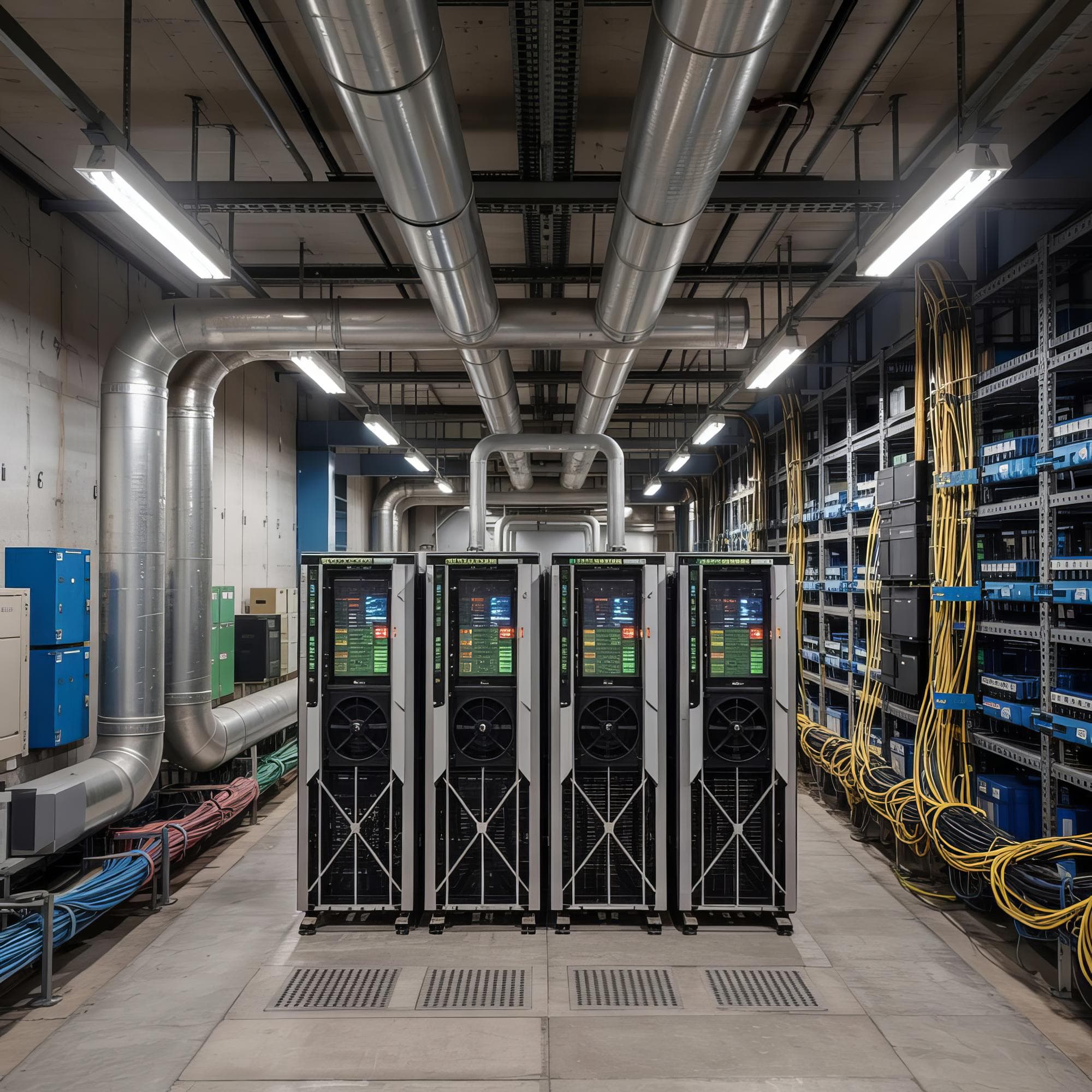
Power redundancy in multi-tenant data centers was once a solved problem. Standardized N+1 or 2N architectures, layered with UPS systems and backup generators, provided sufficient resilience for diversified enterprise workloads. These models assumed variability, modest density, and tolerance for brief transitions.
Those assumptions no longer hold.
As AI workloads enter multi-tenant environments and power density rises across aggregated customers, traditional redundancy models are being pushed beyond their design limits. What once protected against isolated failures now struggles to absorb correlated, sustained stress. In response, multi-tenant facilities are re-engineering power redundancy from the ground up.
For Data Center Energy (DCE), this shift signals a deeper transformation: redundancy is no longer about surviving failure—it is about sustaining continuous operation under constraint.
Legacy Redundancy Models Were Built for Diversity, Not Correlation
Traditional multi-tenant redundancy relied on diversity. Different customers, workloads, and usage patterns reduced the likelihood of simultaneous peak demand or failure.
AI erodes that diversity.
When multiple tenants deploy similar GPU-dense workloads, power draw becomes synchronized rather than staggered. Peaks align. Load becomes flat and sustained. Redundancy systems designed to handle sporadic failure now face continuous stress.
This correlation exposes weaknesses in models that assumed independence.
N+1 Is No Longer Sufficient Under Sustained High Load
N+1 redundancy assumes that one component can fail without impacting operations. Under high-density, sustained load, that margin shrinks.
When systems operate near capacity for extended periods, the failure of a single component can cascade quickly. Backup systems may already be partially loaded. Transition windows narrow.
In these conditions, N+1 becomes a minimum baseline rather than a resilience guarantee.
Multi-tenant facilities are recognizing that redundancy must account for duration, not just event.
Redundancy Must Now Address Power Availability, Not Just Failure
Historically, redundancy focused on equipment failure. Today, it must also address upstream power availability.
Grid constraints, curtailment events, and interconnection limits introduce new failure modes. Power may be unavailable not because equipment breaks, but because supply is restricted.
Redundancy models must therefore include alternative sourcing, not just alternative paths.
This expands redundancy beyond the facility boundary into the energy ecosystem.
Zoned Redundancy Is Replacing Monolithic Design
To manage correlated load, facilities are adopting zoned redundancy models.
Power infrastructure is segmented into smaller, semi-independent zones. Each zone supports a defined subset of tenants with dedicated redundancy capacity.
This segmentation limits blast radius and improves control. Failures or overloads in one zone do not propagate across the entire facility.
Zoned redundancy reflects a move toward finer-grained energy architecture.
On-Site Generation Becomes Part of Redundancy Strategy
Backup generators were once idle assets. In re-engineered models, on-site generation plays an active role.
Generation supports peak load, mitigates grid constraints, and participates in redundancy planning. In some facilities, it operates regularly to preserve redundancy headroom.
This operational role requires rethinking maintenance, fuel logistics, and regulatory compliance—but it significantly enhances resilience.
Energy Storage Expands Redundancy Beyond Bridging
UPS systems traditionally bridged short outages. Modern storage extends redundancy across longer durations and complex transitions.
Batteries now:
• Absorb load during grid instability
• Support seamless switching between sources
• Preserve redundancy during extended events
This elevates storage from support system to resilience backbone.
Tenant Power Profiles Now Influence Redundancy Design
In multi-tenant environments, redundancy can no longer be designed in isolation from tenant behavior.
Facilities increasingly evaluate tenant power profiles, ramp rates, and workload types when allocating capacity. Some restrict certain deployments. Others redesign redundancy to accommodate them.
Energy becomes a shared responsibility rather than an abstract utility.
Redundancy Is Being Repriced and Repositioned
As redundancy becomes more complex and capital-intensive, it is being repriced.
Tenants deploying high-density, high-correlation workloads may pay premiums for enhanced redundancy. Standard redundancy tiers give way to differentiated service levels.
This pricing evolution reflects the true cost of resilience under modern load conditions.
Regulatory and Insurance Pressure Reinforce Change
Regulators and insurers increasingly scrutinize redundancy models under extreme load scenarios.
Facilities must demonstrate resilience not just to single failures, but to prolonged stress events. Legacy certifications may no longer suffice.
This external pressure accelerates redesign.
What This Means for Data Center Energy Strategy
For Data Center Energy, the re-engineering of redundancy in multi-tenant facilities underscores a key reality:
Resilience is no longer static. It is adaptive.
• Redundancy must account for sustained AI load
• Energy sourcing is part of resilience
• Segmentation improves control
• Tenant behavior shapes infrastructure
Facilities that fail to evolve face reliability risk and competitive disadvantage.
Redundancy Is Becoming a Capacity Allocation Problem
What is changing in multi-tenant facilities is not the concept of redundancy, but its purpose. Redundancy is no longer designed solely to protect against rare failure events. It is being redesigned to manage who gets power, when they get it, and how much risk the facility absorbs on their behalf.
As AI workloads compress diversity and synchronize demand, redundancy becomes a tool for controlling contention rather than preventing outages. Facilities are no longer asking, “Can we survive a failure?” They are asking, “Can we sustain multiple tenants operating at peak density indefinitely without forcing tradeoffs?”
That shift reframes redundancy as an economic and architectural decision, not just an engineering one. Power architecture now determines which tenants can be supported, which workloads are viable, and how aggressively capacity can be sold without destabilizing the system.
For multi-tenant data centers, this marks a turning point. Competitive advantage will no longer come from advertising N+1 or 2N designs. It will come from how intelligently redundancy is segmented, enforced, and aligned with tenant behavior. In an AI-driven environment, redundancy is no longer insurance.
It is governance.