Friday, December 12, 2025
Power-First Development: How Data Center Projects Are Now Designed Backwards
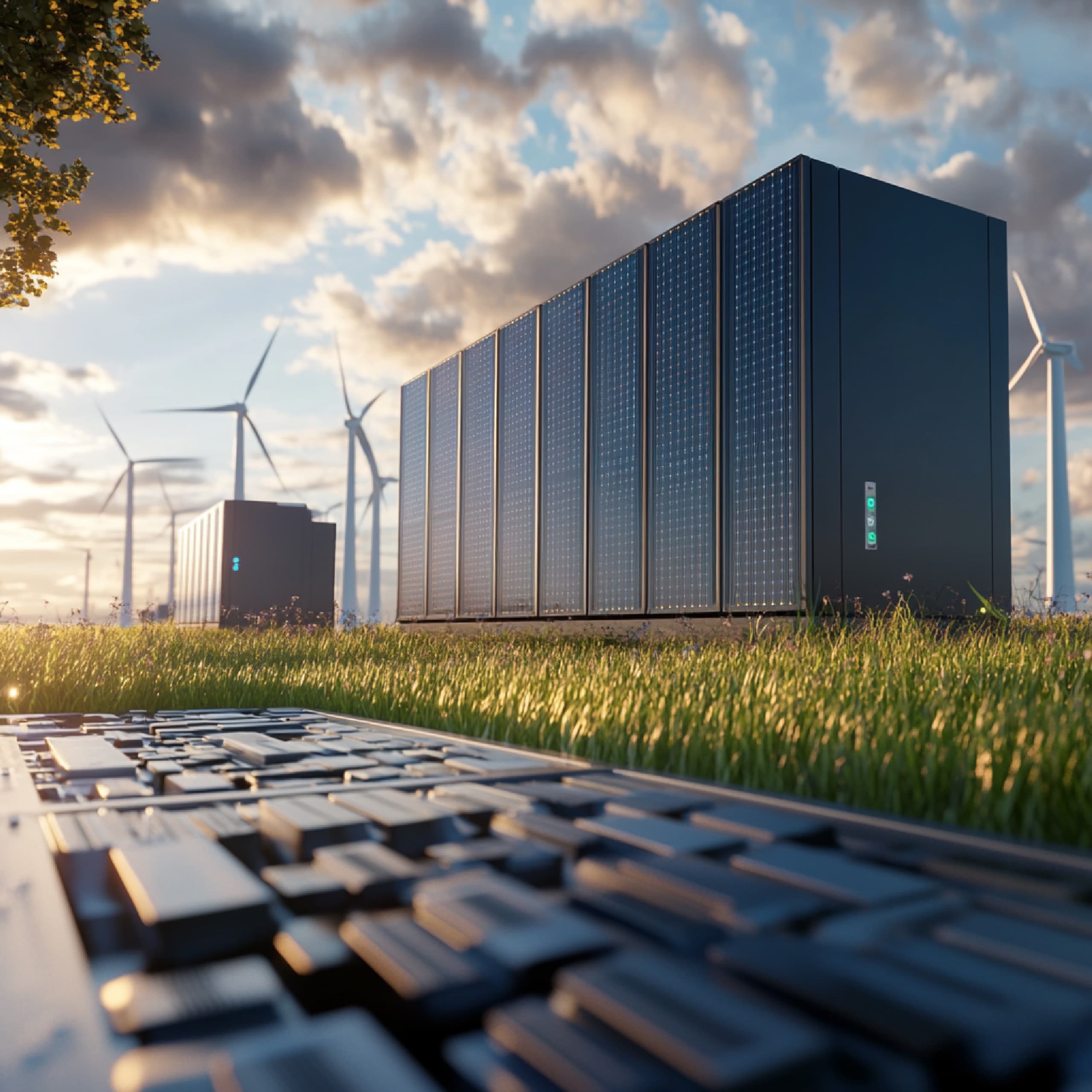
For decades, data center development followed a familiar formula. Developers identified land near major metros, assessed fiber connectivity, designed facilities around anticipated tenant demand, and coordinated with utilities to deliver power in parallel with construction. Power was a constraint—but rarely the constraint.
That model is no longer viable.
As the industry moves into 2026, data center development is being fundamentally reengineered. The traditional linear process—land → design → permits → construction → power—has been replaced by a reversed, power-centric methodology where electrical capacity defines everything downstream.
This shift, often described by developers as “designing backwards,” reflects a new reality: without secured, deliverable power, no amount of land, capital, or architectural sophistication can produce viable digital infrastructure.
This article explores how power-first development is reshaping data center projects worldwide, why utilities have become the most critical stakeholder in development timelines, how site selection criteria are evolving, and what this reversal means for developers, hyperscalers, enterprises, and investors planning for the next decade of growth.
Why the Traditional Development Model Broke
The legacy data center development workflow worked in an era defined by:
- Predictable grid expansion
- Moderate rack densities
- CPU-centric workloads
- Flexible timelines
- Incremental capacity growth
That environment no longer exists.
What changed
Several structural forces collided:
- AI workloads now demand sustained, high-density power at unprecedented scale
- Grid congestion has reached critical levels in primary markets
- Substation and transmission lead times have extended to 3–7 years
- Sustainability mandates complicate traditional power sourcing
- Utility approval processes have become more complex and politicized
As a result, projects designed under the old model frequently stall—not because of land, capital, or design issues, but because power cannot be delivered on the required timeline.
In today’s market, power uncertainty equals project risk.
What “Power-First Development” Actually Means
Power-first development is not simply about prioritizing electrical engineering earlier in the process. It is a complete inversion of how projects are conceived.
The new sequence
Modern data center projects increasingly follow this order:
- Identify viable power capacity
- Secure utility commitments and timelines
- Design substations and transmission pathways
- Validate long-term MW scalability
- Align cooling and mechanical strategy to power constraints
- Select land that fits power delivery realities
- Design buildings around energized capacity
- Phase construction based on MW availability
In other words, power defines the project, not the other way around.
Utilities Have Become the Gatekeepers of Development
In a power-constrained world, utilities are no longer passive service providers. They are now the most influential stakeholders in data center development.
Why utilities matter more than ever
- They control grid access
- They dictate delivery timelines
- They approve interconnection designs
- They influence permitting outcomes
- They assess environmental impact
In many markets, utilities effectively decide:
- Which projects move forward
- Which stall indefinitely
- Which regions attract new development
As a result, developers are engaging utilities years earlier than before—often before land is even acquired.
Substations First, Buildings Second
One of the clearest signs of power-first development is the changing role of substations.
From support infrastructure to primary asset
Historically, substations were supporting components. Today, they are:
- The most capital-intensive element of the project
- The longest lead-time item
- The primary risk factor
- The foundation of scalability
Developers now design:
- Private substations
- Multi-feed architectures
- Expandable transformer yards
- Redundant transmission pathways
before finalizing building layouts.
In many cases, buildings are treated as modular shells attached to a power plant-like core.
Land Selection Is Now Constrained by Power Geometry
Land acquisition strategies have also changed dramatically.
Old criteria
- Proximity to major metros
- Low land cost
- Favorable zoning
- Access to fiber
New criteria
- Distance to transmission corridors
- Substation adjacency
- Grid headroom availability
- Utility service territory dynamics
- Renewable energy proximity
This is why developers increasingly bypass traditional hubs in favor of:
- Secondary U.S. markets
- Southern and Eastern Europe
- Nordics
- Latin America
- Select APAC regions
Power geometry—not geography—now determines where projects can exist.
Phased Development Is No Longer Optional
Power-first development inherently favors phased delivery.
Why phasing dominates
- Utilities rarely deliver full capacity at once
- AI demand evolves rapidly
- Capital deployment must align with energized MWs
- Cooling strategies change as density increases
Modern projects are designed in MW-defined phases, not building phases.
A project may:
- Deliver 20–40 MW in Phase 1
- Add capacity incrementally over 5–15 years
- Adapt density and cooling between phases
This approach reduces stranded assets and aligns infrastructure with real demand.
Cooling and Power Are Now Designed Together
Cooling design can no longer be separated from power planning.
High-density AI workloads mean:
- Cooling consumes a larger share of total power
- Inefficient cooling reduces usable compute capacity
- Liquid cooling becomes essential
Developers now design:
- Cooling loops around electrical capacity
- Liquid-ready halls from day one
- Mechanical systems sized for future density
In effect, cooling strategy becomes a power optimization tool, not just a thermal one.
Power-First Development Is Driving New Financial Models
The inversion of development logic is also reshaping project economics.
Key financial implications
- Higher upfront infrastructure CAPEX
- Longer pre-development timelines
- Increased utility-related risk
- Greater emphasis on pre-leasing
- Longer tenant commitments
To offset risk, developers increasingly:
- Secure anchor tenants early
- Pre-sell power capacity
- Partner directly with hyperscalers
- Share infrastructure costs with tenants
Power-secured projects command higher valuations and stronger investor confidence.
How Power-First Development Is Reshaping Global Markets
Power-first thinking is reorganizing the global data center map.
Markets losing momentum
- Legacy hubs with grid congestion
- Regions with slow permitting
- Areas with water or sustainability restrictions
Markets gaining relevance
- Regions with excess generation capacity
- Markets investing in grid modernization
- Areas with renewable-heavy energy mixes
- Jurisdictions offering fast-track approvals
This is why new global clusters are emerging outside traditional top-tier metros.
What Enterprises and Hyperscalers Must Understand
For buyers of data center capacity, power-first development changes how deployments must be planned.
New buyer realities
- Power timelines matter more than move-in dates
- Expansion rights are critical
- Geographic flexibility is strategic
- Long-term commitments secure better outcomes
Enterprises that delay power discussions risk:
- Limited site options
- Higher costs
- Inability to scale AI workloads
The Role of Global Marketplaces in Power-First Planning
As projects become more power-constrained, buyers need visibility beyond traditional markets.
Platforms like Datacenters.com help enterprises:
- Identify power-ready facilities globally
- Compare MW availability across regions
- Access build-to-suit opportunities
- Understand realistic delivery timelines
In a power-first world, access to accurate information is a competitive advantage.
The New Development Mindset
Power-first development is not a temporary adjustment—it is the new baseline.
Developers who succeed in 2026 and beyond will be those who:
- Think like energy planners
- Partner deeply with utilities
- Design infrastructure for adaptability
- Build for power, then scale compute
The era of space-first development is over.
Designing for Power Is Designing for the Future
The reversal of data center development logic reflects a deeper truth about the modern digital economy: compute is only as powerful as the energy that feeds it.
As AI accelerates demand and grids struggle to keep pace, power-first development has become the only viable path forward. By designing projects backwards—starting with megawatts, substations, and delivery timelines—developers are adapting to a world where energy certainty defines success.
This shift is reshaping where data centers are built, how they are financed, how quickly they scale, and which regions emerge as global infrastructure leaders. In the years ahead, the most successful projects will not be those with the largest footprints, but those with the most secure, scalable, and intelligently planned power.