Wednesday, January 28, 2026
Substations, Transmission, and Time: The New Critical Path for Data Center Construction
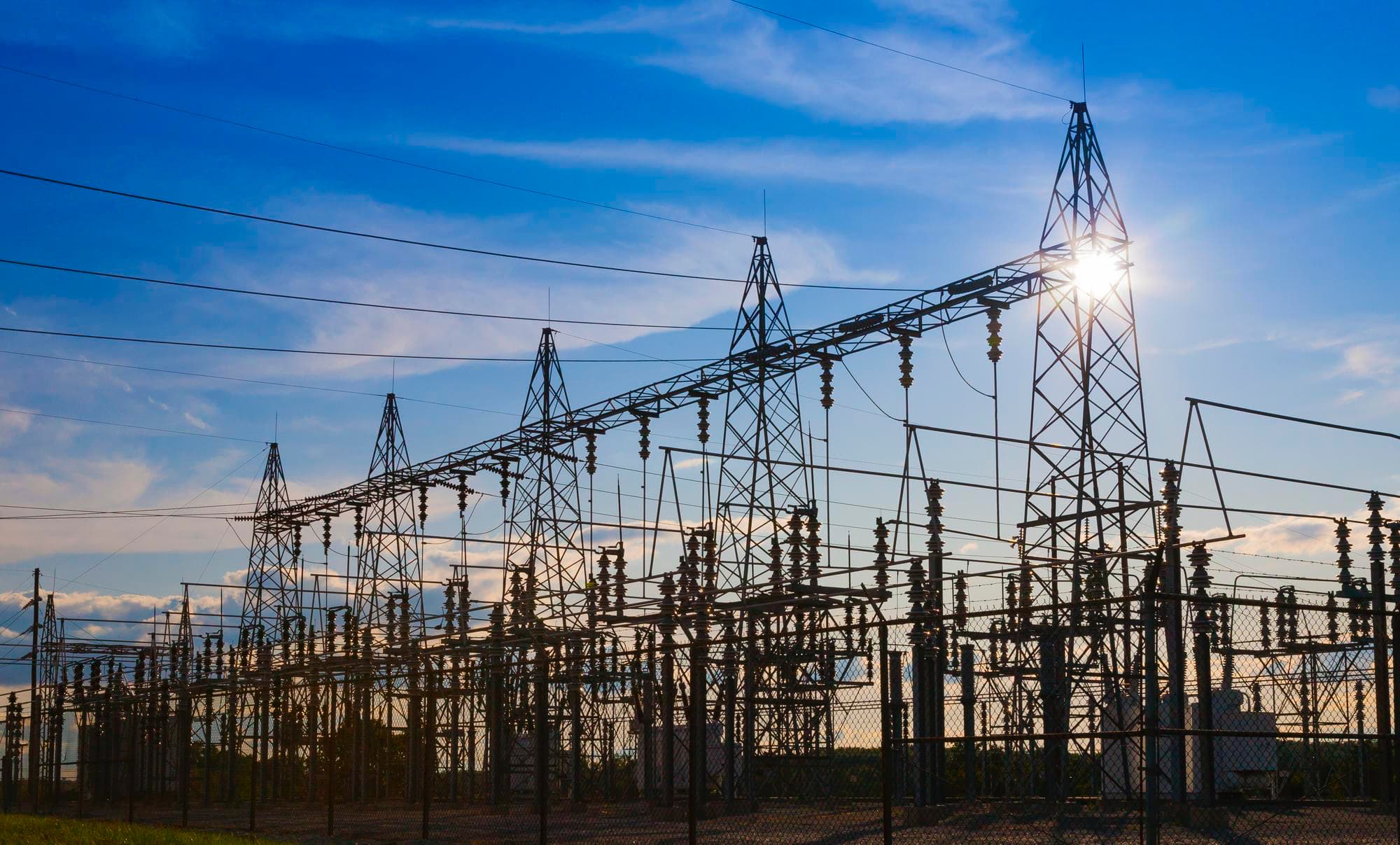
For decades, data center construction followed a predictable critical path. Land acquisition, zoning, financing, vertical construction, and tenant fit-out defined project timelines. Power was essential, but it was typically treated as a parallel workstream—important, yet assumed to be solvable within the broader development schedule.
That assumption no longer holds.
In today’s data center energy landscape, substations, transmission capacity, and time have emerged as the true critical path. These elements now dictate whether a project proceeds, stalls, or fails outright. Buildings can be designed quickly. Capital can be raised. Demand is abundant. But without aligned energy infrastructure, none of it matters.
For Data Center Energy (DCE), this shift represents a structural reordering of priorities. Power infrastructure is no longer a dependency ofdevelopment. Development is now a dependency of power infrastructure.
Substations Have Become the Physical Gatekeeper of Digital Growth
Substations are no longer background infrastructure. They are the physical gatekeepers of digital expansion.
A data center’s theoretical megawatt requirement means nothing without a substation capable of delivering that power at the right voltage, reliability tier, and timeline. In many markets, existing substations are already at or near capacity. New substations require land, permitting, utility coordination, specialized equipment, and multi-year timelines.
What makes substations uniquely constraining is their indivisibility. Unlike generation or transmission upgrades that can sometimes be phased or incrementally expanded, substations represent hard thresholds. Once capacity is exhausted, no amount of capital or urgency can bypass the constraint.
As a result, projects increasingly rise or fall based on substation access rather than site quality or tenant demand. Control of substation capacity has become one of the most valuable strategic advantages in the data center ecosystem.
Transmission Access Is the Hidden Constraint Behind “Available Power”
Generation capacity often exists on paper. Transmission capacity is where projects fail.
Many regions have sufficient generation to support additional data center load, but lack the transmission infrastructure to move that power to where data centers are being built. High-voltage lines, rights-of-way, environmental reviews, and interconnection approvals introduce delays that stretch far beyond traditional development timelines.
Transmission expansion is slow by design. It involves multiple jurisdictions, regulatory bodies, and public stakeholders. Even when projects are approved, construction can take years.
For DCE strategy, this creates a disconnect between nominal grid capacity and usable capacity. Developers may be told power exists, only to discover that transmission bottlenecks make delivery impractical within required timeframes.
Time Has Become the Most Scarce Energy Resource
In energy-constrained markets, time is now as critical as megawatts.
Data center demand—particularly AI-driven demand—operates on compressed timelines. Compute requirements emerge quickly and scale aggressively. In contrast, energy infrastructure operates on civic timelines measured in years, not quarters.
This mismatch elevates time as the binding constraint. A site with abundant long-term power potential but a five-year energization timeline is effectively unusable for near-term demand. Conversely, a site with limited but immediate power availability becomes highly competitive.
DCE decision-making increasingly prioritizes time-to-power over total capacity.
Power Infrastructure Now Leads, Construction Follows
The traditional development sequence has inverted. Instead of designing facilities and then securing power, projects now begin with power feasibility and build outward from there.
Energy studies, interconnection applications, substation planning, and utility negotiations occur before architectural design is finalized. In some cases, land is acquired specifically because it aligns with existing or planned energy infrastructure—not because it is otherwise ideal.
This power-first sequencing reshapes every aspect of development, from site selection to financing to tenant engagement.
Utilities Are Being Forced Into a Gatekeeping Role
Utilities did not ask to become arbiters of digital growth, but that is the role they now play.
With limited infrastructure and escalating demand, utilities must prioritize which projects move forward and which wait. This prioritization is based on grid stability, long-term planning, regulatory obligations, and sometimes political pressure—not just willingness to pay.
From a DCE perspective, this introduces a new layer of strategic complexity. Success depends not only on technical feasibility, but on alignment with utility planning cycles and investment priorities.
Substation-Controlled Sites Are Outperforming “Prime” Locations
Sites once considered secondary are outperforming prime real estate simply because they are power-ready.
A parcel adjacent to an expandable substation or along an uncongested transmission corridor can outperform a centrally located, incentive-rich site with no clear energy pathway. This reality is reshaping land valuation and market hierarchies.
Energy proximity is becoming more valuable than geographic proximity.
Equipment Lead Times Compound the Critical Path Problem
Substation construction is further constrained by equipment availability. Transformers, switchgear, and high-voltage components face extended lead times driven by global demand, manufacturing concentration, and supply chain fragility.
Even fully permitted projects can stall waiting for equipment delivery. This compounds time risk and reinforces the importance of early energy planning.
DCE strategy now must account for manufacturing capacity just as much as grid capacity.
Why This Critical Path Will Not Normalize Quickly
There is no rapid fix to substation and transmission constraints. Grid modernization takes time. Regulatory reform moves slowly. Manufacturing capacity cannot be expanded overnight.
Meanwhile, AI and digital infrastructure demand continue to accelerate.
This imbalance ensures that substations, transmission, and time will remain the critical path for data center construction for the foreseeable future.
What This Means for Data Center Energy Strategy
For DCE, the implications are decisive:
- Energy infrastructure is no longer supportive—it is determinative.
- Power readiness defines feasibility.
- Time-to-power defines competitiveness.
- Control of substations defines strategic advantage.
The data center industry has entered an era where digital ambition is constrained by physical energy systems. Those who understand and plan for this reality will shape the next generation of infrastructure. Those who do not will remain stuck behind the meter, waiting.