Friday, December 12, 2025
The 2026 Capacity Crunch: Why Secured Megawatts Matter More Than Square Footage
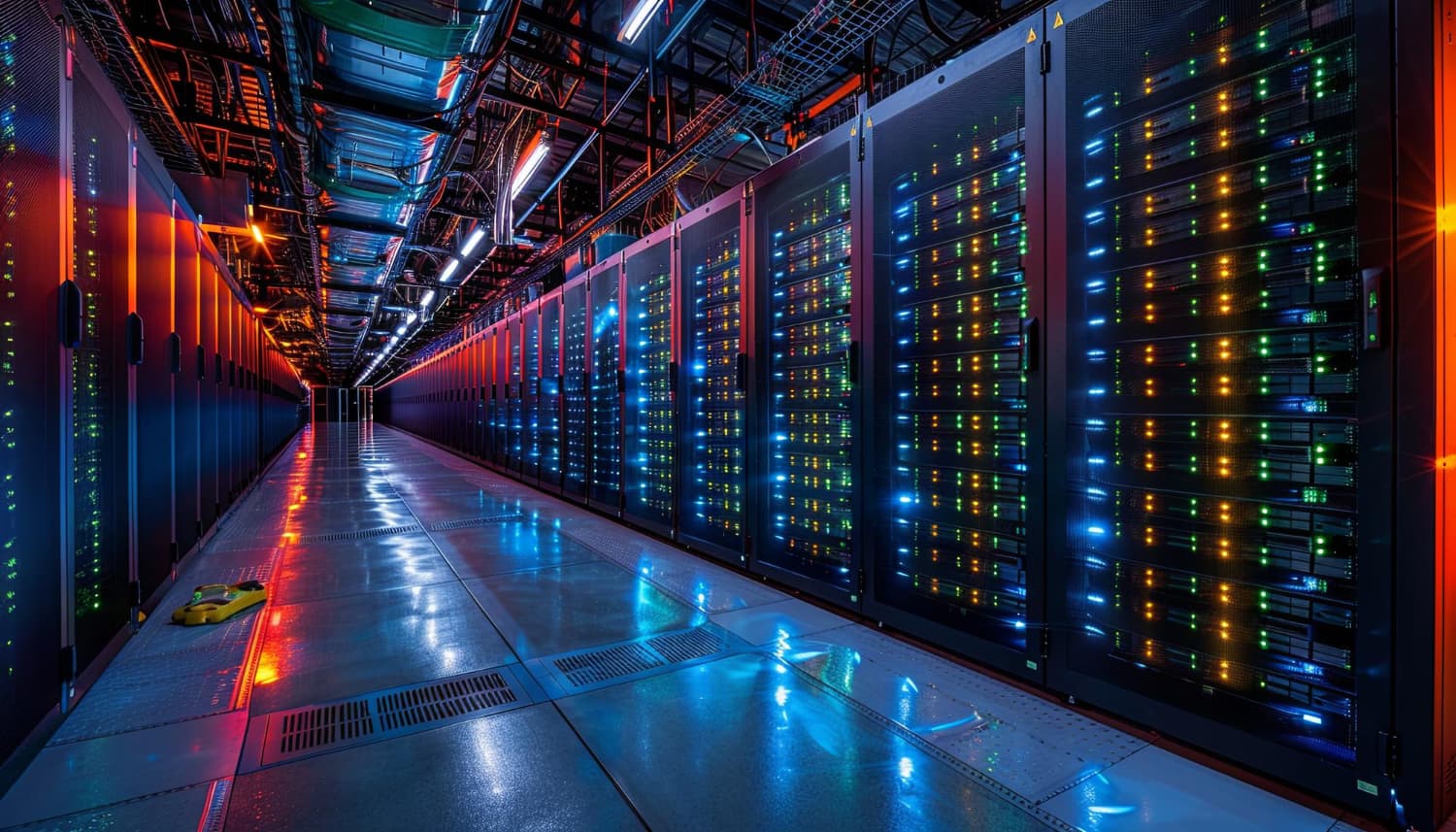
For most of the data center industry’s history, real estate decisions revolved around square footage. How many raised-floor square meters were available? How fast could a shell be delivered? How many racks could fit in a data hall? Space was the limiting factor, and power—while important—was generally assumed to follow.
That assumption no longer holds.
As the industry approaches 2026, the global data center market is facing a structural shift that redefines capacity planning from the ground up. The most constrained resource is no longer land, buildings, or even capital. It is electrical power, measured not in availability on paper, but in secured, deliverable megawatts with realistic timelines.
AI workloads, hyperscale expansion, grid congestion, sustainability mandates, and geopolitical energy realities have converged into what many developers now describe as a capacity crunch. In this environment, a data center without guaranteed power is not future-ready—no matter how large or modern it appears.
This article examines why secured megawatts have overtaken square footage as the defining asset in data center strategy, how this shift is reshaping wholesale colocation, where global pressure points are emerging, and what enterprises, hyperscalers, and investors must understand as they plan infrastructure for 2026 and beyond.
From Space-Constrained to Power-Constrained: A Fundamental Market Shift
The data center industry has experienced constraints before. In earlier cycles, limitations centered on real estate availability in dense metros, construction labor shortages, or capital intensity. Power was a consideration—but rarely the bottleneck.
That has changed decisively.
Why power is now the primary constraint
Several forces have converged:
- AI compute density has increased power consumption per rack by multiples, not increments
- Electric grids were never designed for sustained, multi-hundred-megawatt digital loads
- Substation and transmission timelines now stretch multiple years in many regions
- Renewable energy mandates complicate traditional power procurement
- Competing demand from EVs, manufacturing, and electrification strains supply further
As a result, the industry has entered a phase where:
A data center can exist physically, but not function economically or operationally due to power limitations.
In practical terms, the market has shifted from “Do we have space?” to “Can we actually energize it?”
The AI Effect: Why Megawatts Are Being Consumed Faster Than Ever
Artificial intelligence is the single largest driver behind the current capacity crunch.
Unlike traditional enterprise or cloud workloads, AI training and inference require:
- High-density GPU clusters
- Sustained peak power usage
- Minimal idle cycles
- Large-scale parallelism
A single AI training cluster can consume 20–50 MW, and large campuses supporting multiple models can exceed 200 MW.
Why AI changes power economics
Traditional cloud workloads were elastic. AI workloads are not.
- Training runs last days or weeks
- GPUs operate near full utilization
- Cooling loads remain constant
- Power demand does not taper during off-hours
This creates a base load that utilities struggle to support, particularly in regions already near capacity.
As AI adoption accelerates across industries—from finance and healthcare to manufacturing and defense—the demand for AI-ready capacity is compounding faster than new power infrastructure can be delivered.
Square Footage Without Power Is No Longer Capacity
One of the most important conceptual shifts for 2026 is the distinction between theoretical capacity and usable capacity.
The old model
Historically, capacity was measured by:
- Building size
- Rack count
- Floor load
- Cooling footprint
Power was assumed to scale alongside.
The new reality
Today, capacity must be evaluated by:
- Committed megawatts
- Utility delivery timelines
- Substation readiness
- Grid congestion risk
- Energy sourcing constraints
A 1-million-square-foot campus with uncertain power delivery is less valuable than a smaller facility with fully secured, expandable MW capacity.
This has profound implications for:
- Site selection
- Asset valuation
- Lease negotiations
- Development phasing
- M&A activity
Wholesale Colocation Enters a New Phase
Wholesale colocation sits at the center of the capacity crunch.
Hyperscalers, AI companies, and large enterprises increasingly prefer wholesale environments because they offer:
- Dedicated power blocks
- Custom electrical design
- Long-term scalability
- Higher density tolerance
But even wholesale colocation is not immune to power scarcity.
What’s changed in wholesale deals
In the past, a 20–30 MW commitment was considered significant. Today:
- 50–100 MW deals are becoming common
- Tenants demand future expansion rights
- Power delivery schedules are scrutinized more than lease terms
- Pre-leasing occurs years before construction
Wholesale providers are no longer selling space—they are selling assured energy capacity over time.
Power Is Reshaping Deal Structures and Negotiations
As megawatts become scarce, deal dynamics are shifting.
Key changes in wholesale negotiations
- Power-first contracts: Power commitments are defined before square footage
- Staggered energization clauses: MWs delivered in phases aligned with grid readiness
- Expansion rights baked in: Tenants secure future MW options upfront
- Premium pricing for power certainty: Fully secured MWs command higher rates
- Risk-sharing models: Utilities, developers, and tenants share infrastructure costs
In many cases, tenants are willing to accept:
- Less flexibility
- Longer terms
- Higher upfront costs
In exchange for guaranteed power access.
Global Power Pressure Points: Where the Crunch Is Most Acute
The capacity crunch is global, but its intensity varies by region.
North America
- Northern Virginia remains the largest hub—but grid congestion is severe
- Phoenix, Dallas, and Atlanta face transmission constraints
- Midwest markets are rising due to available power corridors
Europe
- Frankfurt, London, and Amsterdam face regulatory and grid limits
- Southern Europe (Spain, Portugal, Italy) is emerging as an alternative
- Nordics benefit from renewable abundance but face transmission bottlenecks
Asia-Pacific
- Singapore remains constrained by policy
- Japan and Korea face grid modernization challenges
- Southeast Asia offers growth—but with uneven infrastructure readiness
Latin America
- Brazil and Chile benefit from renewable energy but face grid expansion timelines
- Mexico’s power market structure adds complexity
Middle East
- Strong power availability in some regions, but cooling and water challenges persist
Across all regions, one theme is consistent: power availability now defines market viability.
Developers Are Redesigning Projects Around Power
Developers are responding to the capacity crunch by fundamentally rethinking how projects are planned.
Power-first development
Instead of starting with land, developers now:
- Secure grid commitments first
- Design substations before buildings
- Phase construction around power delivery
- Align cooling strategies to maximize MW efficiency
Private infrastructure investment
Developers increasingly:
- Fund substations themselves
- Build private transmission lines
- Partner directly with utilities
- Invest in energy storage
This blurs the line between real estate developer and energy infrastructure provider.
Why Multi-Campus Strategies Are Accelerating
As single-market capacity becomes harder to secure, enterprises and hyperscalers are adopting multi-campus strategies.
Instead of concentrating capacity in one metro, they:
- Distribute workloads across regions
- Balance latency with power availability
- Use wholesale campuses for core compute
- Use retail colo for interconnection and edge
This reduces dependency on any single grid and provides long-term resilience.
The Sustainability Paradox: Green Energy vs. Grid Reality
Sustainability goals add another layer of complexity.
While renewable energy is essential, it is not always:
- Available where demand exists
- Dispatchable on demand
- Compatible with constant AI loads
This creates a paradox where:
- Regions with abundant renewables may lack transmission
- Regions with strong grids may face sustainability restrictions
Developers must now optimize across:
- Power availability
- Carbon intensity
- Regulatory compliance
- Cost predictability
What Enterprises Must Rethink for 2026
Enterprises planning infrastructure for 2026 must recalibrate expectations.
Key shifts in mindset
- Capacity ≠ square footage
- Power timelines matter more than building delivery
- Flexibility may be sacrificed for certainty
- Geographic diversity is strategic, not optional
- Long-term power access is a competitive advantage
Organizations that delay power planning risk:
- Inability to deploy AI workloads
- Forced migration to suboptimal regions
- Higher long-term costs
- Reduced competitiveness
The Role of Marketplaces in a Power-Constrained World
In an environment defined by power scarcity, visibility becomes critical.
Enterprises need insight into:
- Where MW capacity is truly available
- Which providers have secured power
- How long delivery timelines are
- Which markets offer expansion potential
Global platforms like Datacenters.com help bridge this gap by providing:
- Access to power-ready facilities worldwide
- Comparison across regions and providers
- Insight into emerging power-rich markets
- Support for long-term, scalable deployments
In the capacity crunch, information asymmetry is costly. Transparency accelerates smarter decisions.
Looking Ahead: The New Definition of Capacity
As the industry moves into 2026, the definition of data center capacity has permanently changed.
Capacity is no longer:
- How much space exists
- How fast a building can be delivered
- How many racks can fit on a floor
Capacity is now:
- How many megawatts are secured
- How reliably they can be delivered
- How efficiently they can be converted into compute
Those who control power control the future of digital infrastructure.
Megawatts Are the New Scarcity Premium
The 2026 capacity crunch marks a turning point for the data center industry. As AI reshapes compute demand and grids struggle to keep pace, secured megawatts have emerged as the most valuable asset in digital infrastructure. Square footage, once the dominant metric, is now secondary to energy certainty.
Developers are becoming energy strategists. Wholesale colocation is evolving into a power delivery business. Enterprises are rethinking where and how they deploy compute. And global markets are being re-ranked based on electrical readiness rather than geographic prestige.
In this new era, the winners will not be those with the largest campuses—but those with the most deliverable, expandable, and sustainable power.
Megawatts are no longer a line item.
They are the strategy.