Friday, September 18, 2026
The Gas Turbine Pipeline
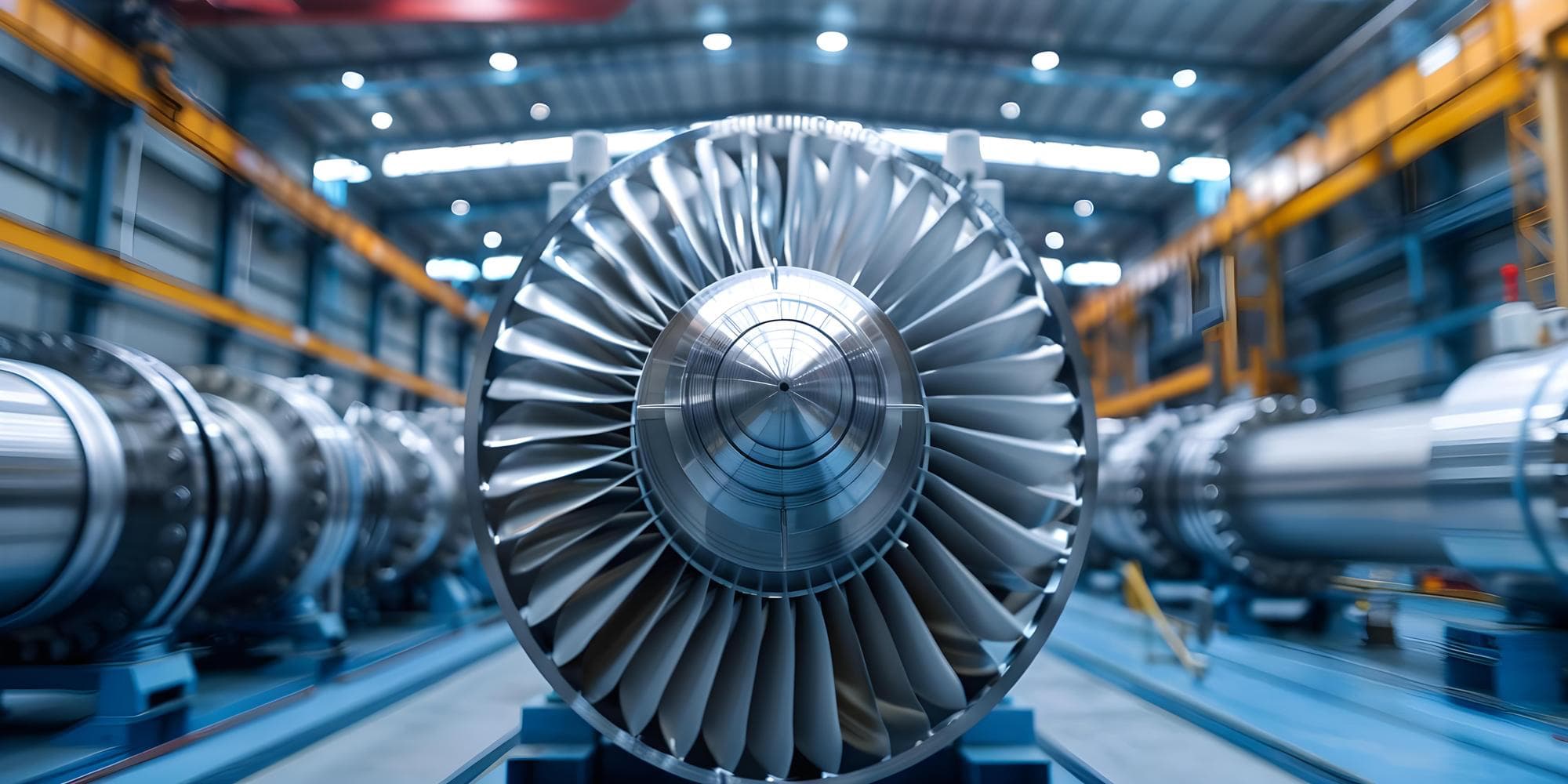
The conversation around gas turbines and data centers is changing. What was once primarily an energy technology discussion is increasingly becoming a development and procurement discussion, particularly as AI and hyperscale campuses consider on-site and behind-the-meter generation as part of their broader power strategies.
The shift is visible in the equipment market. GE Vernova reported in July 2026 that its gas-power equipment backlog and slot reservation agreements had reached 116 GW, up from 100 GW at the end of the first quarter. The company expects that figure to reach at least 125 GW by the end of 2026 and is expanding annual gas turbine production from approximately 20 GW in 2026 toward 24 GW in 2028 and 30 GW by 2030.
That growth extends beyond a single manufacturer. Siemens Energy announced a $1 billion U.S. investment program in February that includes increased gas turbine production and the resumption of gas turbine manufacturing in Charlotte, North Carolina. Meanwhile, several equipment agreements announced during 2026 are targeting hundreds of megawatts or even gigawatts of generation associated with data center demand.
For data center developers, the implication is increasingly important: planning an on-site generation strategy is one challenge, but securing the equipment required to execute it is another. The gas turbine pipeline is becoming part of the data center development pipeline.
Gas Turbines Are Moving Into the Data Center Power Plan
Gas turbines are not new technology, and they are not new to critical infrastructure. What is changing is the scale and role being considered for data center applications. Rather than serving exclusively as emergency backup, gas generation is increasingly being evaluated for primary, bridge, supplemental, and behind-the-meter power configurations.
The attraction is closely connected to the development requirements of large campuses. Data centers need reliable electricity at substantial scale, but the timing of computing infrastructure and utility infrastructure does not always align. A campus may be capable of beginning construction well before all of the transmission, substation, or generation infrastructure required for its ultimate load is complete.
On-site generation can provide another option within that energy strategy. Depending on the project, turbines can operate alongside the grid, support a microgrid, provide initial capacity while other infrastructure develops, or become part of a longer-term generation portfolio. GE Vernova, for example, is currently marketing multiple configurations for data centers ranging from on-site generation to grid-connected hybrid systems combining turbines with battery storage and other resources.
The strategic question is therefore becoming broader than whether gas turbines are appropriate for a particular project. Developers also need to determine when equipment should be secured and how its delivery schedule aligns with the rest of the campus.
The Equipment Timeline Matters
A power strategy is only executable when the equipment supporting it can be delivered. This is particularly important for projects attempting to coordinate land development, data center construction, fuel infrastructure, electrical equipment, permitting, generation, and utility interconnection on overlapping schedules.
Large turbine orders provide a useful indication of how far ahead that planning can extend. In February 2026, Baker Hughes announced an order for 10 Frame 5 gas turbines supporting up to 250 MW of generation for U.S. data center projects in Georgia and Texas, with initial deliveries scheduled for 2027. The companies also described the order as an initial step toward a broader multi-gigawatt collaboration.
In July, Baker Hughes and Kodiak Gas Services announced another multi-year agreement designed to support up to 1.8 GW of generation capacity. The initial award covers approximately 1 GW, with delivery expected through 2030. Importantly, the companies described the rolling structure as a way to align equipment commitments with evolving data center demand and phased project development.
These agreements illustrate an important development principle. If generation is expected to support a future data center campus, equipment procurement cannot necessarily wait until the building is approaching completion. The turbine timeline can become part of the project's critical path.
Reserving a Turbine Can Resemble Reserving Future Capacity
The idea of equipment reservations is particularly significant. Data center developers are already familiar with securing future resources well before they are needed, whether through land control, utility capacity commitments, transformer procurement, or long-lead construction materials. Gas turbine manufacturing increasingly introduces a similar consideration.
GE Vernova's reporting combines contracted equipment with slot reservation agreements, providing a clear indication that future manufacturing capacity itself has strategic value. Its gas-power equipment backlog and slot reservations increased from 83 GW at the end of 2025 to 100 GW in the first quarter of 2026 and 116 GW in the second quarter.
For a data center project, reserving manufacturing capacity can provide greater visibility into when generation equipment could become available. That does not guarantee that the broader project will be completed on the same schedule, since permitting, gas supply, electrical infrastructure, construction, emissions requirements, and numerous other factors still need to align. It does, however, remove one important uncertainty from the development plan.
The strategic value lies in synchronizing the equipment pipeline with the power pipeline.
Data Center Orders Are Reaching Gigawatt Scale
The size of recent agreements also shows how quickly the market is evolving. In 2025, Crusoe and GE Vernova announced orders totaling 29 LM2500XPRESS aeroderivative turbine packages expected to provide nearly 1 GW of electricity for AI data center infrastructure.
The trend has continued in 2026. Baker Hughes announced in July that Dynamis Power Solutions ordered 76 NovaLT16 gas turbines and associated equipment totaling approximately 1.3 GW for mobile generation serving data center and energy applications. Earlier in the year, Caterpillar announced an alliance supporting an initial 2 GW of natural-gas generation for a hyperscale AI infrastructure development, with deliveries scheduled from September 2026 through August 2027.
These are not conventional backup-power quantities. They illustrate how generation procurement is beginning to operate at the same scale as the campuses themselves.
For developers evaluating hundreds of megawatts of future load, this changes the nature of the conversation. Turbine procurement can become a portfolio decision rather than an individual-building decision, particularly when multiple phases or multiple sites share a common energy strategy.
Manufacturing Capacity Is Responding
Growing demand is also generating investment further upstream in the supply chain. Manufacturers are expanding facilities, adding production capacity, and making long-term investments designed to serve broader electricity demand.
GE Vernova says it is implementing actions to increase annual gas turbine output to 30 GW by 2030. Siemens Energy's U.S. investment program includes expanded transformer production, gas turbine manufacturing, turbine component manufacturing, switchgear production, and other grid equipment investments.
This is an important part of the data center energy story because power infrastructure ultimately depends on industrial capacity. A generation project requires far more than financing and a suitable site. It depends on turbines, generators, transformers, switchgear, controls, emissions systems, and a network of specialized suppliers capable of manufacturing and integrating those components.
As data center demand stimulates investment in those supply chains, the relationship can become mutually reinforcing. Larger demand supports manufacturing expansion, while expanded manufacturing capacity can support additional energy development.
Turbine Strategy Is More Than Buying Equipment
Securing a turbine does not create an operational power plant by itself. A viable project must integrate generation equipment into a broader system that includes fuel supply, electrical infrastructure, controls, emissions management, maintenance, permitting, and grid coordination where applicable.
That distinction is especially important for data centers because reliability requirements are exceptionally high. Generation must be designed around the operating profile of the campus, including load characteristics, redundancy requirements, maintenance schedules, expansion plans, and the interaction between on-site resources and utility service.
Different turbine technologies can also serve different roles. Aeroderivative units can offer modularity and operational flexibility, while larger heavy-duty turbines may be considered for substantial long-duration generation requirements. The appropriate configuration depends on the scale and objectives of the individual project rather than a universal data center design.
For that reason, turbine procurement should follow energy architecture, not replace it. The objective is to select and secure equipment that supports the broader power strategy.
The First Phase May Not Look Like the Final Campus
Large data center campuses rarely reach their ultimate load immediately. A project designed to support several hundred megawatts may begin with a significantly smaller initial phase and expand as buildings and computing capacity are added.
That creates an opportunity for generation infrastructure to develop in parallel. Modular equipment can potentially be deployed in stages, allowing generation capacity to grow alongside the campus rather than requiring the ultimate configuration to be completed at the outset.
The energy system may also evolve as other infrastructure becomes available. A campus could initially rely more heavily on on-site generation and later integrate additional utility capacity, battery storage, renewable resources, or other generation technologies. Alternatively, turbines installed for the initial development period could remain part of the long-term reliability and energy portfolio.
This makes flexibility an important procurement consideration. The strongest strategy is not necessarily the one optimized exclusively for the first building. It is the one capable of supporting the campus through multiple stages of development.
Gas Supply Is Part of the Turbine Decision
Equipment availability is only one component of a gas generation strategy. A project also needs access to sufficient fuel infrastructure, and that requirement becomes increasingly significant as generation capacity increases.
A campus considering hundreds of megawatts of continuous generation needs to evaluate pipeline proximity, available gas capacity, pressure requirements, infrastructure upgrades, contracting structures, redundancy, and long-term fuel availability. These considerations can influence both site selection and project economics.
This is another reason turbine planning should begin early. Land, electricity, gas, and generation cannot be evaluated independently when they are expected to support the same development. A site with an attractive turbine solution but insufficient fuel infrastructure may require substantial additional work before the generation strategy becomes executable.
The gas pipeline and the turbine pipeline therefore need to progress together.
Permitting Belongs on the Same Timeline
Air permitting and environmental requirements also need to be incorporated early. Gas turbine projects can be subject to federal, state, and local regulations that vary according to equipment type, operating profile, emissions controls, location, and project scale.
For large data center campuses, these requirements can influence technology selection and development schedules. Modern turbine configurations can incorporate emissions-control technologies, but equipment capability does not eliminate the need for appropriate regulatory review and permitting.
This makes permitting another component of procurement strategy. A turbine delivery date has limited value if the associated project cannot legally begin operation on the same timeline.
Successful development therefore requires coordination between equipment procurement, engineering, environmental review, fuel infrastructure, construction, and the broader data center schedule.
Bridge Power Is Becoming a Strategic Category
One of the most interesting potential roles for gas turbines is bridge power. In this model, on-site generation supports data center operations while larger utility or transmission infrastructure progresses.
The concept is not necessarily about replacing the grid. It is about addressing a timing mismatch between when computing capacity can be developed and when additional grid capacity can be delivered. Caterpillar has previously described turbine applications specifically in the context of bridge power for hyperscale data centers until utility capacity becomes available.
For some projects, that bridge could last several years. For others, on-site generation may ultimately remain part of the permanent energy architecture after additional utility capacity arrives.
The distinction matters because equipment selected for temporary service may be evaluated differently from generation expected to operate as a long-term campus resource. Developers need to understand the intended role from the beginning so that the generation strategy remains economically and operationally aligned with the broader project.
Batteries Can Complement the Turbine Fleet
Gas turbines also do not have to operate in isolation. Battery energy storage can complement generation by responding to rapid changes in load, supporting power quality, and providing another layer of flexibility within a campus energy system.
This can be particularly relevant for AI infrastructure, where computing loads may behave differently from traditional enterprise data center demand. Caterpillar's 2 GW Monarch project, for example, is designed to combine natural-gas generation with battery storage to manage load variability associated with AI infrastructure.
Hybrid configurations demonstrate why the turbine conversation is becoming part of a broader energy architecture discussion. The objective is not simply to install enough generation to match a headline MW figure. It is to design a system capable of supporting the actual operating characteristics of the campus.
As those systems become more sophisticated, turbines, batteries, utility service, controls, and potentially additional generation resources can increasingly be planned as components of one integrated strategy.
Procurement Is Moving Earlier
The broader lesson from the turbine market is that procurement decisions are moving upstream in the data center development process. When equipment availability extends across multiple years and project requirements reach hundreds of megawatts, waiting until late-stage construction can introduce unnecessary uncertainty.
Developers increasingly need to evaluate turbine requirements alongside site control, utility capacity, gas availability, permitting, campus design, and financing. That does not mean every project should immediately reserve equipment. It means the equipment market needs to be understood early enough to determine whether procurement could become part of the critical path.
This is similar to the broader transformation occurring across data center energy. Power planning is moving earlier because electricity infrastructure takes time to develop. Turbine planning is following the same pattern.
A New Layer of Energy Due Diligence
The growth of on-site generation also creates another consideration for investors, developers, and customers evaluating data center projects. A proposed generation strategy should be assessed according to more than its headline capacity.
Important questions include whether equipment has been ordered or reserved, when delivery is expected, what fuel infrastructure is required, whether permitting has begun, how the plant will connect to the campus, and what role the generation will play after additional utility capacity becomes available.
These details help distinguish a conceptual generation strategy from one that has progressed toward execution. Just as a claimed utility capacity figure requires supporting documentation, a planned 500 MW generation project requires a credible pathway from equipment procurement through commercial operation.
That credibility may become increasingly important as more data center projects incorporate on-site power into their development plans.
The Turbine Pipeline Is Becoming a Data Center Timeline
The most significant development may ultimately be the connection between two industries that historically planned on very different cycles. Data center developers think about buildings, customers, servers, GPUs, and deployment schedules. Power equipment manufacturers think about manufacturing slots, supply chains, long-term service, and generation projects that may operate for decades.
AI infrastructure is bringing those timelines closer together.
When a campus requires hundreds of megawatts of generation, the turbine manufacturing schedule can influence when computing infrastructure becomes operational. Equipment reservations can affect development planning, while data center demand can influence manufacturing investment years into the future.
The turbine is no longer simply an energy asset purchased after the project has been designed. In some developments, it may become part of the schedule around which the project is designed.
Secure the Equipment Behind the Megawatts
Gas turbines are gaining attention in the data center industry because they can provide another pathway to large-scale, dispatchable power. However, the more important strategic development may be occurring behind the technology itself.
Equipment availability is becoming part of power availability.
As turbine backlogs expand and manufacturers invest in additional production capacity, data center developers considering on-site generation need to understand how procurement timelines fit within their broader development plans. A generation strategy that depends on equipment arriving several years in the future requires decisions well before the campus reaches full buildout.
That does not mean every data center should pursue gas generation, nor does it make turbines a replacement for utility partnerships or broader grid investment. Gas turbines are one component of a rapidly expanding range of energy strategies available to large campuses.
For projects where turbines are part of the solution, however, one question is becoming increasingly important: not simply how many megawatts the campus needs, but when the equipment capable of producing those megawatts can actually be secured.