Wednesday, September 23, 2026
The Transformer Pipeline
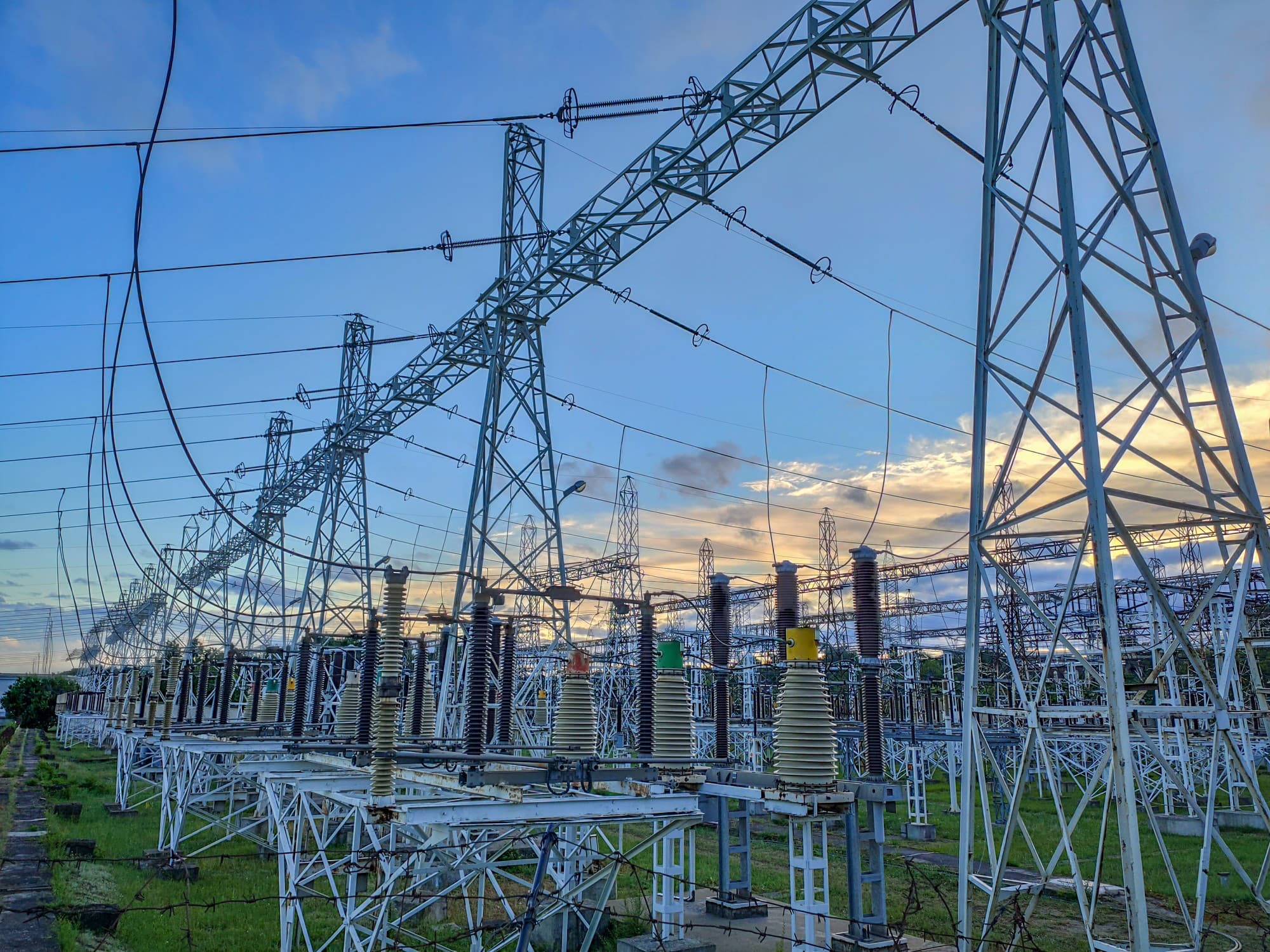
A data center can secure land, establish a utility relationship, identify a pathway to hundreds of megawatts, and still face another critical question: can the electrical equipment required to deliver that power arrive on the same schedule as the campus?
That question is becoming increasingly important as data center development and U.S. electricity demand accelerate simultaneously. Transformers, switchgear, circuit breakers, and other high-voltage components form the physical connection between generation, the grid, substations, and ultimately the computing infrastructure inside a data center. Without them, committed electricity capacity cannot simply move from the power system into the facility.
The scale of investment now moving into U.S. electrical-equipment manufacturing reflects that importance. In September 2026, Hitachi Energy announced a $528 million transformer manufacturing facility in Mississippi as part of approximately $1.5 billion in U.S. manufacturing expansion. That announcement followed the June groundbreaking of a $457 million large power transformer facility in Virginia. Other manufacturers are also expanding transformer, switchgear, and grid-equipment production as utilities, data centers, and other large electricity users increase demand.
For data center developers, this creates an important shift in power strategy. Securing the megawatts is essential, but so is securing the infrastructure capable of delivering them.
The Megawatt Still Has to Reach the Data Center
Electricity availability is often discussed as though capacity were a single resource. A project either has 100 MW, 300 MW, or 500 MW, or it does not. In practice, delivering that capacity requires an interconnected system of generation, transmission, substations, transformers, switchgear, protection systems, and distribution infrastructure.
Transformers play a particularly important role because electricity must move between different voltage levels as it travels through the power system. Large power transformers support the transmission network, while other transformers progressively adapt electricity for distribution and ultimately for use within the data center campus.
For a large project, this means that a utility's ability to serve the requested load is only one component of the development timeline. The physical infrastructure connecting that capacity to the campus must also be engineered, manufactured, transported, installed, tested, and commissioned.
As power requirements increase, the equipment required to accomplish that task becomes part of the broader speed-to-power strategy.
Transformers Are Moving Upstream in Development Planning
Historically, some electrical-equipment procurement decisions could occur relatively late in the development process. That approach becomes more difficult when major components require substantial engineering and manufacturing lead times.
The U.S. Department of Energy reported in August 2026 that critical grid equipment, including transformers, circuit breakers, substation components, and power electronics, can face lead times of two years or more. A separate 2026 analysis of large power transformers found typical procurement timelines of approximately 2.5 to three years for certain units, with extra-high-voltage transformers potentially extending to five years.
Those timelines can overlap with significant portions of the data center development cycle. A campus expected to begin operating several years from now may therefore need key electrical-equipment decisions well before the buildings themselves are approaching completion.
This changes procurement from a downstream construction activity into an earlier development consideration. Developers increasingly need visibility into transformer specifications, manufacturing availability, substation design, utility requirements, and equipment delivery schedules while other parts of the project are still progressing.
The Substation and the Data Center Are Becoming One Schedule
The connection between equipment procurement and development becomes particularly clear at the substation. A new data center campus may require a dedicated substation or significant upgrades to existing utility infrastructure, and the completion of that work can directly influence when the campus can be energized.
The building schedule and the substation schedule therefore cannot be treated independently. If the data halls are ready before critical electrical infrastructure, the computing capacity cannot operate as planned. Conversely, delivering electrical infrastructure significantly ahead of the campus can create different capital and scheduling considerations.
Successful development increasingly requires these timelines to converge. Utility engineering, transformer procurement, switchgear manufacturing, civil construction, electrical installation, commissioning, and data center construction need to progress with a common energization objective.
The critical path to a new data center may therefore extend far beyond the property boundary.
Manufacturing Capacity Is Becoming Part of Power Capacity
This leads to a broader strategic point. Discussions about U.S. data center power typically focus on generation and grid capacity, but the manufacturing base supporting that infrastructure is also part of the equation.
The Department of Energy has identified limited domestic production capacity, imported components and materials, and extensive equipment customization among the factors contributing to long procurement timelines for grid equipment. DOE is also developing a program of up to $375 million intended to strengthen domestic manufacturing supply chains for distribution and power transformers and other grid components.
Private investment is expanding at the same time. Hitachi Energy's newly announced Mississippi facility is expected to more than double the production capacity of its existing operations in the area, while its Virginia project is intended to establish what the company describes as the nation's largest large power transformer production facility.
The implication for data centers is significant. Expanding generation capacity without expanding the equipment supply chain would leave an incomplete solution. More transformers, switchgear, breakers, and related components are required if new electricity resources are to become usable capacity for large customers.
Manufacturing capacity is therefore increasingly connected to speed to power.
The Electrical Supply Chain Is Expanding Beyond Transformers
Transformers are only one part of the story. A modern data center power system requires multiple categories of electrical equipment, and manufacturers are investing across that broader infrastructure stack.
In April 2026, Eaton announced a new 370,000-square-foot Nebraska facility dedicated to increasing medium-voltage switchgear production, with operations expected to begin in 2027. The company specifically linked the expansion to growing requirements from AI data centers, utilities, and industrial customers. In September, Eaton announced another investment of more than $242 million in Arkansas to double U.S. manufacturing capacity for customized electrical enclosures serving data center and other infrastructure markets.
GE Vernova is also expanding its Pennsylvania power transmission manufacturing operations through a $138 million investment in a facility producing high-voltage circuit breakers, switchgear products, and instrument transformers. The company has explicitly positioned the expansion around shortening equipment lead times and helping utilities connect energy-intensive loads, including data centers.
Taken together, these investments show that the data center power buildout is becoming an industrial manufacturing story as much as an electricity-generation story.
Standardization Could Become a Speed-to-Power Strategy
One of the most interesting opportunities is standardization. Electrical infrastructure has traditionally involved substantial customization based on utility specifications, site conditions, voltage requirements, redundancy designs, and local engineering standards. Some customization will always be necessary, particularly for complex high-voltage systems.
However, excessive variation can make manufacturing and procurement more difficult. DOE has identified more than 80,000 varieties of distribution transformers across the United States and has been working with utilities and manufacturers to identify opportunities for more interoperable designs.
For data center developers, the same general principle can have strategic value. Large platforms developing multiple buildings or campuses may benefit from repeatable electrical architectures where site and utility conditions allow them. Standardized transformer specifications, substation configurations, switchgear arrangements, and modular electrical systems can potentially improve procurement visibility and reduce repeated engineering work.
Siemens Energy has similarly highlighted repeatable transformer and breaker designs as a way to improve forecasting, procurement, and manufacturing efficiency for data center infrastructure.
Standardization does not mean every campus becomes identical. It means reducing unnecessary variation so that engineering and manufacturing can operate more efficiently.
Procurement Can Become a Portfolio Decision
As data center platforms grow, electrical procurement may also evolve from a project-level activity toward a portfolio-level strategy. A developer building one facility has very different purchasing requirements from an organization planning several campuses and multiple phases over a period of years.
A larger development platform can potentially forecast equipment requirements across that pipeline. Rather than evaluating each transformer or switchgear package independently, the organization can identify common requirements, expected delivery windows, future campus phases, and equipment needs across multiple markets.
That visibility can improve conversations with manufacturers and utilities. It can also help development teams understand which components should be secured early and which can remain aligned with later project milestones.
This approach mirrors what is already happening elsewhere in data center infrastructure. Developers increasingly think about power, land, construction, and computing capacity at portfolio scale. Electrical equipment can become part of that same planning process.
The Transformer Has Its Own Logistics Strategy
Large power transformers present another challenge that is easy to overlook: transportation. These units can be extremely large and heavy, requiring specialized railcars, trailers, cranes, route studies, and careful coordination from the factory to the installation site.
A 2026 federally funded analysis of the large power transformer supply chain highlighted transportation as one of several important challenges associated with the equipment. Large units cannot always be moved along conventional logistics routes without significant planning.
For data center developers, this means procurement does not end when manufacturing is complete. Delivery logistics need to be incorporated into the construction schedule, particularly when equipment must arrive at a substation site within a narrow installation window.
The larger the electrical infrastructure becomes, the more important these logistics considerations can be. A transformer may represent one component of a much larger project, but its arrival can influence when several other activities can proceed.
Equipment Strategy Begins With the Utility
Despite the growing role of developer procurement, the utility remains central to transformer and substation strategy. Equipment specifications need to align with the electrical system to which the campus will connect, and ownership structures can vary substantially between markets and projects.
In some cases, utilities may procure and own critical equipment. In others, developers may take greater responsibility for infrastructure associated with their facilities. Large campuses may also involve combinations of utility-owned and customer-owned electrical systems.
This makes early coordination essential. Developers need clarity around technical specifications, ownership responsibilities, procurement obligations, construction milestones, testing requirements, and energization procedures before major equipment orders are placed.
Ordering earlier is valuable only when the equipment being ordered is aligned with the final electrical architecture.
On-Site Generation Adds Another Equipment Layer
The growth of on-site and behind-the-meter generation creates additional complexity. A campus incorporating gas turbines, battery storage, renewable generation, or a microgrid requires electrical infrastructure capable of integrating those resources with the data center load and, where applicable, the utility system.
Transformers and switchgear therefore become important not only for grid-connected power but also for generation located at or near the campus. The electrical architecture must accommodate different sources of power while maintaining the reliability and operating characteristics required by critical computing infrastructure.
This is where the transformer pipeline connects directly with the gas turbine pipeline. Securing generation equipment addresses one part of the power strategy. The project must still transform, control, protect, and distribute the electricity produced.
The energy system needs to be planned as a complete architecture rather than as a collection of independent components.
AI Density Extends the Electrical Conversation Inside the Campus
The transformer story does not stop at the utility interconnection. AI infrastructure is also changing electrical design inside the data center as rack densities increase and operators explore new approaches to delivering power efficiently to computing equipment.
Higher-density environments place greater emphasis on medium-voltage distribution, power conversion, protection systems, and the architecture connecting utility or on-site generation to the IT load. Manufacturers are responding with new products and integrated approaches intended to simplify portions of that electrical chain.
This means the broader power discussion increasingly stretches from generation all the way to the rack. The transformer, substation, switchgear, power distribution equipment, and computing infrastructure need to function as parts of a coordinated system.
For developers, that makes early collaboration between energy, electrical engineering, facility design, and technology teams increasingly valuable.
Domestic Manufacturing Is Becoming Part of the Data Center Buildout
Perhaps the most positive development is the scale of manufacturing investment now occurring in response to growing electricity demand.
Hitachi Energy's U.S. manufacturing expansion has reached approximately $1.5 billion following its latest Mississippi announcement. Siemens Energy is executing a $1 billion U.S. investment program that includes increased transformer production and new grid-component manufacturing. Eaton has invested more than $1.5 billion in manufacturing capacity since 2023 across its broader operations, while GE Vernova continues to expand production of transmission equipment.
These investments represent more than additional factory space. They expand the industrial ecosystem supporting utilities, generation projects, data centers, manufacturing facilities, and broader electricity growth.
Data center demand is therefore helping create activity beyond the campuses themselves. The infrastructure required to support computing growth is generating investment in factories, equipment, engineering capabilities, and skilled manufacturing jobs across the United States.
The Equipment Pipeline Can Influence Market Selection
Electrical-equipment availability could also become another consideration when developers compare markets. Utility capacity and energy prices remain critical, but the ability to execute the infrastructure required to deliver that capacity matters as well.
A market with a clearly defined substation plan, established equipment procurement strategy, and coordinated utility schedule may provide greater development certainty than one where those elements remain unresolved. This is particularly relevant for campuses with aggressive energization targets or substantial future expansion requirements.
The distinction reinforces an important principle in modern data center energy strategy: theoretical power and executable power are not the same thing.
Execution depends on the entire chain being ready.
From Power Availability to Power Deliverability
The industry has become increasingly sophisticated in how it evaluates electricity. Developers now distinguish between capacity that may theoretically exist in a region and capacity that can realistically be delivered to a specific site within the required timeframe.
Electrical equipment adds another layer to that distinction.
Generation may exist. Transmission capacity may exist. A utility may support the project. Yet the site still requires the physical infrastructure capable of connecting those elements and converting electricity into usable power for the campus.
That makes deliverability the more complete metric.
The strongest energy strategy considers not only where the megawatts originate, but every major piece of infrastructure required to move those megawatts from the power system to the computing environment.
The Equipment Behind Speed to Power
The next phase of data center growth will require substantial investment across the entire electricity system. New generation will be needed, transmission networks will expand, substations will be constructed, and utilities will continue developing new approaches to serving increasingly large loads.
Behind all of that development sits another requirement: the equipment.
Transformers, switchgear, circuit breakers, electrical assemblies, and related infrastructure determine whether planned electricity capacity can ultimately become usable data center capacity. As project requirements grow, procurement and manufacturing timelines are therefore moving closer to the center of development strategy.
The response is already underway. Manufacturers are investing billions of dollars in U.S. production, new factories are being developed, existing facilities are expanding, and the industry is exploring greater standardization and more repeatable infrastructure designs.
For data center developers, the lesson is not simply to order transformers earlier. It is to think about electrical equipment as part of the power strategy from the beginning.
Securing a megawatt establishes the opportunity. Building the infrastructure required to deliver it turns that opportunity into usable capacity.