Saturday, February 28, 2026
Why Enterprises Are Investing in On-Site Power for Digital Resilience
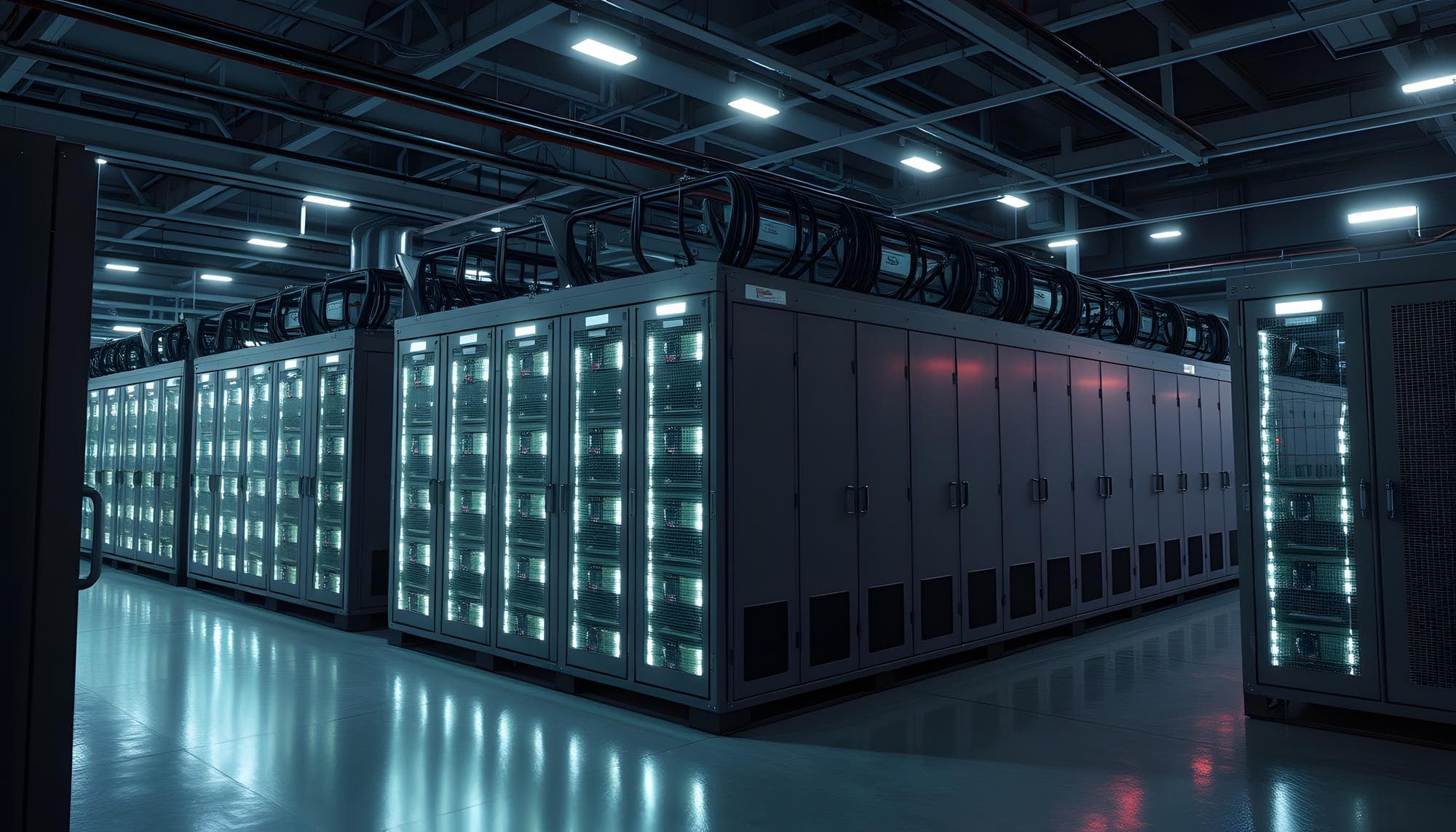
Enterprise infrastructure strategy is undergoing a quiet but decisive shift. For years, enterprises trusted public grids to provide reliable electricity while focusing their own investments on compute, software, and connectivity. Power was considered a solved problem—stable, regulated, and largely outside the enterprise risk envelope.
That assumption is eroding.
As digital operations become continuous, data-intensive, and increasingly dependent on AI, enterprises are reassessing where resilience actually comes from. Grid outages, curtailment events, price volatility, and interconnection delays have moved from abstract risks to material operational threats. In response, enterprises are investing directly in on-site power as a core pillar of digital resilience.
This move is not driven by ideology or sustainability signaling. It is driven by operational necessity.
Digital Operations Have Zero Tolerance for Power Disruption
Modern enterprises run on always-on digital systems. ERP platforms, real-time analytics, AI-driven decision engines, and customer-facing applications operate continuously across global operations.
Even short power interruptions can cascade across systems, disrupting supply chains, financial operations, and customer experiences. Recovery is no longer a simple restart—it can involve data reconciliation, model retraining, and system resynchronization.
As tolerance for disruption approaches zero, reliance on external power systems alone becomes untenable.
Grid Reliability Is Becoming Less Predictable
Grids remain reliable in aggregate, but predictability at the local level is declining.
Extreme weather events, deferred infrastructure investment, renewable intermittency, and growing demand have increased the frequency of localized disruptions. In some regions, utilities now openly acknowledge capacity constraints and curtailment risk during peak periods.
For enterprises with mission-critical operations, this uncertainty translates directly into business risk.
On-site power reduces exposure to upstream instability.
AI Adoption Amplifies Energy Risk
AI workloads intensify the consequences of power instability.
Training and inference pipelines often run continuously and cannot be paused without cost. Interruptions can corrupt processes, degrade outputs, or require expensive recomputation.
As enterprises deploy AI deeper into operations—manufacturing optimization, logistics planning, fraud detection—power reliability becomes inseparable from business continuity.
On-site power provides the control required to support these workloads reliably.
On-Site Power Shifts Resilience From Reactive to Proactive
Traditional resilience strategies focused on reacting to outages—backup generators, manual failover, disaster recovery plans.
On-site power enables proactive resilience.
Enterprises can:
• Control generation and load prioritization
• Isolate from grid disturbances
• Schedule maintenance without disruption
• Design power behavior around operational needs
This shift turns resilience into a design feature rather than an emergency response.
Predictable Energy Costs Support Long-Term Planning
Beyond outages, price volatility increasingly affects enterprise planning.
Energy costs fluctuate due to fuel prices, capacity shortages, and regulatory changes. For energy-intensive digital operations, these swings introduce budgeting uncertainty.
On-site generation—often paired with long-term fuel contracts or renewables—stabilizes costs. Predictability supports long-term investment and pricing decisions.
Resilience includes financial resilience.
Enterprises Are No Longer Waiting for Utilities to Catch Up
Many enterprises recognize that grid upgrades will take years.
Rather than wait, they are investing directly in generation, storage, and hybrid systems that meet near-term needs while remaining grid-connected.
This parallel-track approach allows operations to scale despite external constraints.
Waiting is no longer a viable resilience strategy.
On-Site Power Enables Geographic Flexibility
Enterprises increasingly deploy digital infrastructure across distributed locations—regional facilities, edge sites, and specialized campuses.
Grid conditions vary widely across geographies. On-site power reduces dependence on local grid quality, enabling more flexible site selection and expansion.
Resilience becomes portable rather than location-bound.
Regulatory and Insurance Pressures Reinforce the Shift
Regulators and insurers now scrutinize power resilience as part of operational risk assessment.
Enterprises with on-site power demonstrate reduced exposure to outages and supply disruptions, improving insurability and compliance posture.
This external validation accelerates adoption.
On-Site Power Is Becoming Part of Core Infrastructure
What once belonged to facilities management is now an executive concern.
Energy strategy increasingly sits alongside cybersecurity, data governance, and supply chain resilience in enterprise risk frameworks.
On-site power investments reflect this elevation.
Digital Resilience Now Includes Energy Control
The definition of digital resilience is expanding.
It no longer ends with redundant servers or multi-cloud architectures. It includes the ability to sustain operations regardless of external energy conditions.
Enterprises investing in on-site power are acknowledging a simple reality: control over energy is control over continuity.
In a world where digital operations cannot pause, resilience begins at the source of power itself.