Friday, February 27, 2026
Why Substations Are Becoming the Most Valuable Asset in Data Center Development
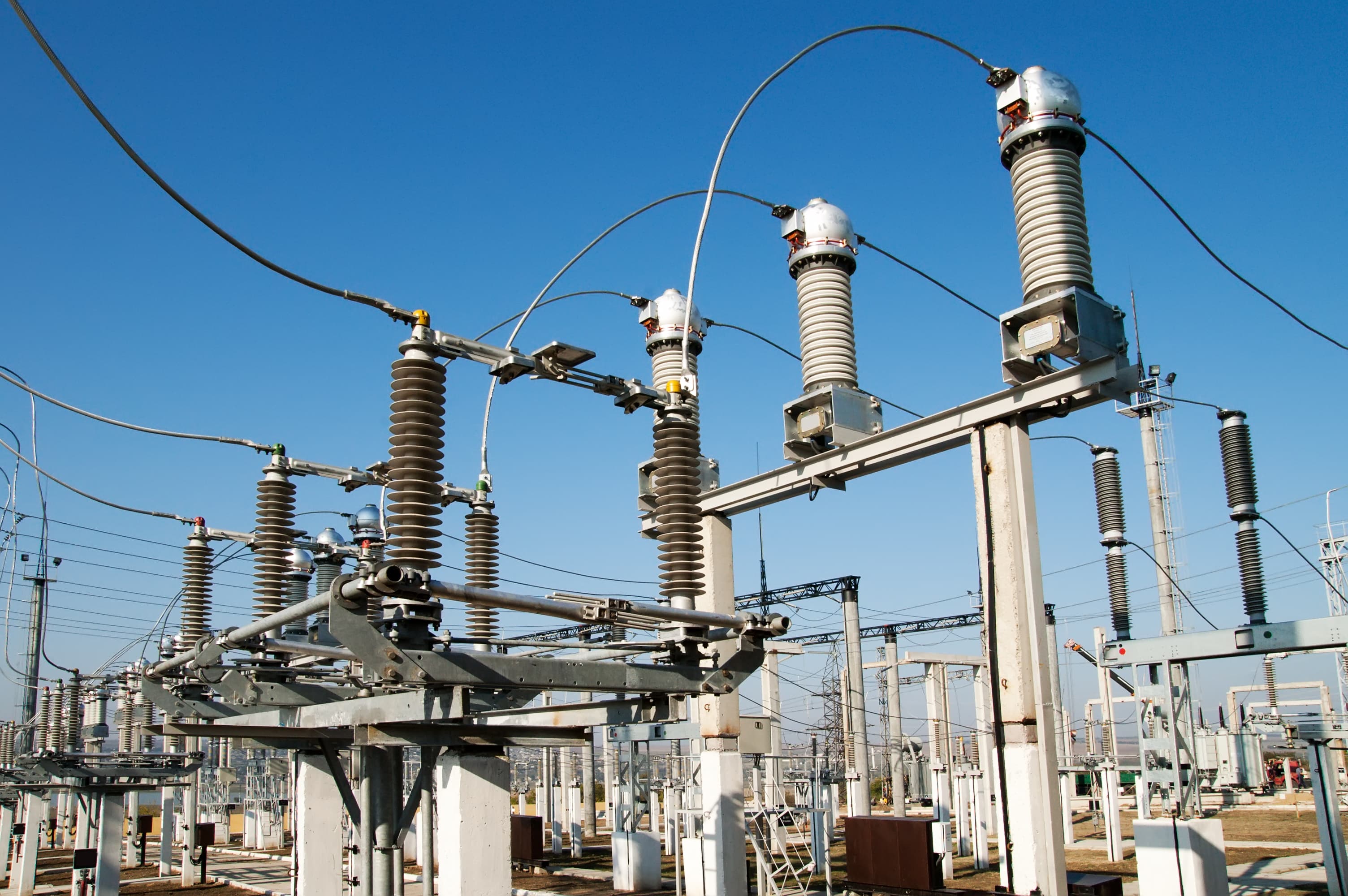
In the current phase of data center growth, value has shifted decisively away from traditional markers like land size, proximity to metros, or tax incentives. Instead, one piece of infrastructure now determines whether a project can exist at all: the substation.
Substations have quietly become the most valuable asset in data center development. They dictate power availability, interconnection timelines, expansion potential, and long-term viability. In an era where digital demand vastly outpaces grid expansion, control over substation capacity is often more important than control over land.
For Data Center Energy (DCE), substations are no longer background infrastructure. They are the fulcrum around which development success pivots.
Substations Define the Boundary Between Possible and Impossible
A substation is not just a technical component—it is a hard boundary.
If substation capacity exists and can be expanded, development proceeds. If it does not, no amount of capital, demand, or political support can force a project forward on a meaningful timeline.
Unlike generation, which can be added elsewhere, or transmission, which can sometimes be rerouted, substations anchor power delivery to a specific location. They represent the final step between grid-scale energy and site-level usability.
This makes substations uniquely decisive.
Control of Substation Capacity Is Scarcer Than Land
Land can be assembled. Zoning can be changed. Incentives can be negotiated.
Substation capacity cannot be conjured on demand.
Most substations were designed decades ago for residential, commercial, or light industrial load profiles. AI-driven data centers overwhelm those assumptions. Expanding substations requires space, equipment, regulatory approval, and years of execution.
As a result, substation capacity is often scarcer than developable land—and far harder to replace.
Substations Compress or Expand Timelines Dramatically
The presence of an expandable substation can compress project timelines by years.
Sites adjacent to substations with headroom or planned upgrades move forward quickly. Sites that require new substations face multi-year delays before construction can even begin.
This timing differential reshapes market competitiveness. Speed-to-power now outweighs speed-to-build.
For DCE strategy, timeline compression is a primary source of value creation.
Substations Determine Expansion Optionality
Initial power delivery is only part of the equation. Long-term expansion depends on substation scalability.
A site may launch with modest capacity but require expansion as demand grows. If substation expansion is not feasible, growth stalls regardless of demand.
This makes substations critical not just for launch—but for lifecycle viability.
Developers increasingly evaluate substation expansion paths before committing to sites.
Utilities Prioritize Substation Investment Strategically
Utilities do not expand substations indiscriminately. Investment decisions reflect grid stability, regulatory mandates, and long-term planning.
Data center demand influences these decisions—but does not guarantee priority. Utilities may favor projects that align with broader grid goals or economic development strategies.
As a result, developers seek to align with utility planning early, positioning projects where substation investment is likely.
For DCE, understanding utility incentives becomes as important as engineering.
Substation Ownership and Control Create Asymmetry
In some cases, developers or operators invest directly in substations or secure exclusive capacity rights.
This creates asymmetry. Projects with secured substation capacity leapfrog competitors stuck in interconnection queues.
Substation control becomes a competitive moat, limiting access for others.
This dynamic mirrors land banking—but with far higher barriers to entry.
Capital Markets Are Recognizing Substation Value
Investors increasingly recognize substations as value-generating assets rather than sunk costs.
Projects with secured substation pathways attract capital more easily. Valuations reflect reduced execution risk and faster revenue realization.
In some cases, substations are financed as standalone assets, integrated into broader energy infrastructure portfolios.
For DCE, this represents a shift in how value is underwritten.
Substations Reorder Market Hierarchies
Markets once considered secondary gain prominence when they possess available or expandable substation infrastructure. Conversely, prime markets stagnate when substations are saturated.
This reordering is not theoretical—it is happening now.
Substation readiness reshapes where growth concentrates, independent of historical market rankings.
Substations Are Becoming Strategic, Not Technical
Perhaps the most important shift is conceptual.
Substations are no longer viewed as technical necessities handled late in development. They are strategic assets evaluated at the very beginning.
Energy strategy now starts with substations, not buildings.
What This Means for Data Center Energy Strategy
For Data Center Energy, the implications are clear:
• Substations are the new bottleneck
• Control of capacity defines competitiveness
• Expansion potential matters as much as initial delivery
• Energy infrastructure drives asset value
In a constrained world, the most valuable assets are those that unlock possibility.
The Future of Data Center Development Runs Through Substations
As AI demand accelerates and grids struggle to keep pace, substations will remain the choke point between ambition and reality.
Developers who secure substation pathways will build. Those who do not will wait or exit markets entirely.